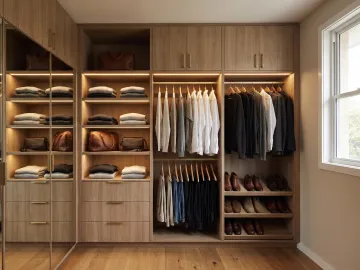
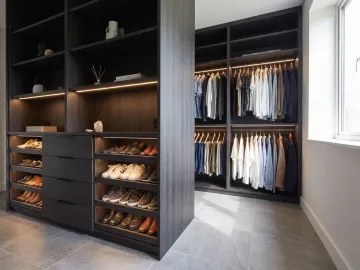
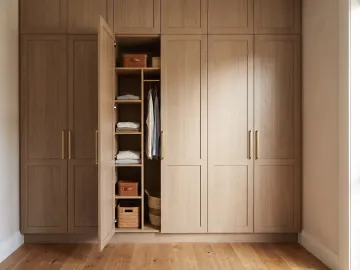
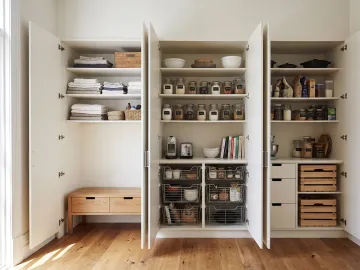
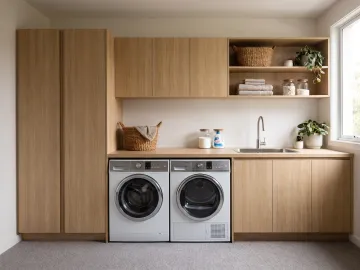
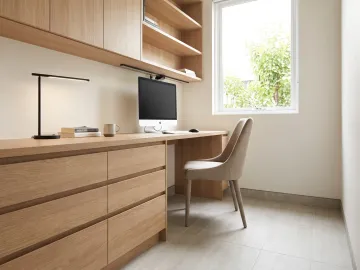
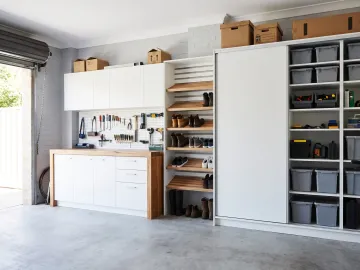
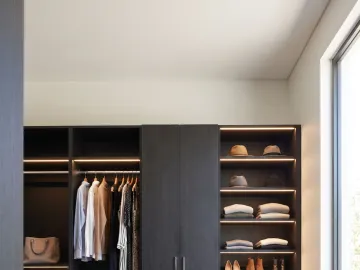
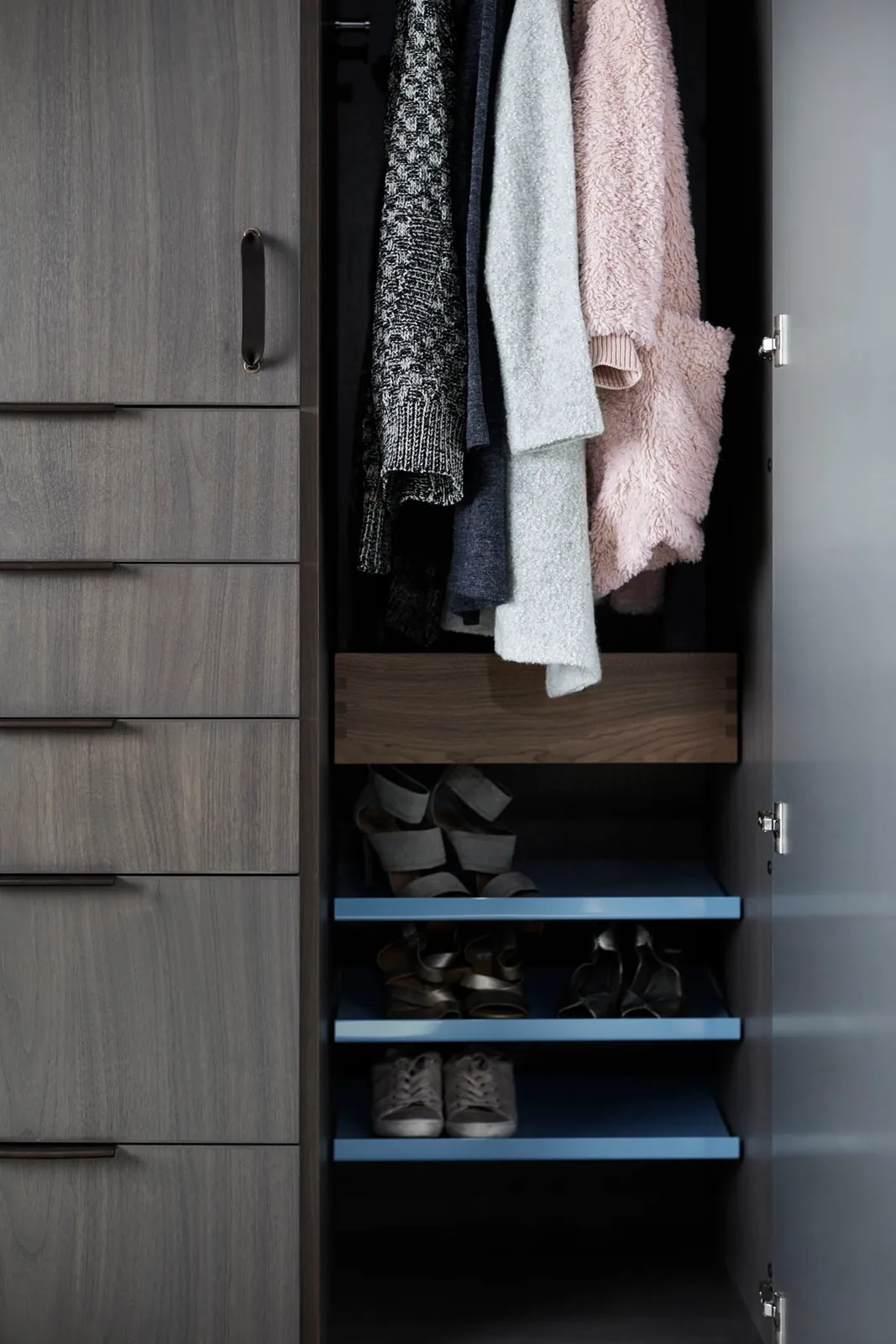
Short answer: drawers for small things and anything you do not want on show: underwear, socks, t-shirts, activewear, pyjamas, accessories. Shelves for things that stack neatly and look fine: jumpers, jeans, bags, hats. A typical wardrobe wants four to six drawers per person in one bay and three to five adjustable shelves in another. Drawers cost more than shelves, so put them where they earn it.
What belongs in drawers
Anything small, anything that does not stack, and anything private.
- Underwear and socks: shallow drawers, 150 to 200mm.
- T-shirts, singlets, activewear: medium drawers, 200 to 250mm, folded vertically so every item is visible.
- Pyjamas, swimwear, scarves: medium drawers.
- Jumpers and jeans, if you prefer them hidden: deep drawers, 250 to 300mm.
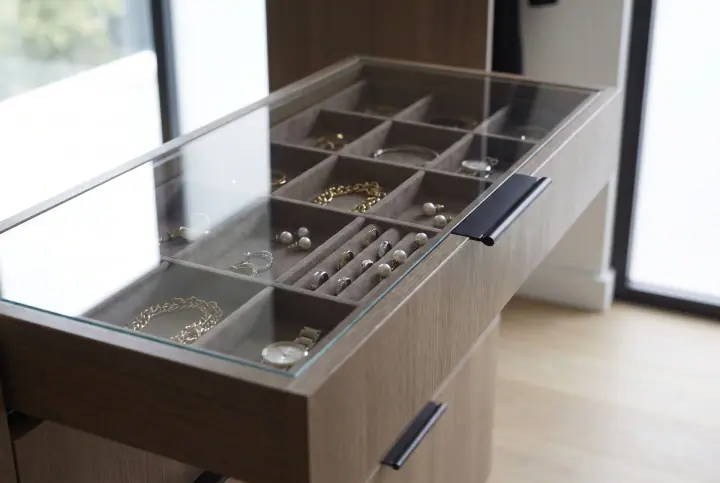
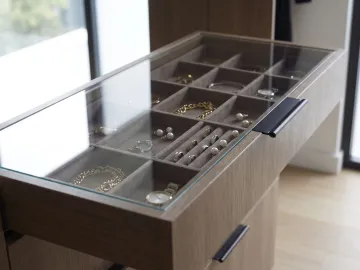
- Jewellery, watches, belts: a shallow top drawer with dividers, ideally glass-topped.
What belongs on shelves
Anything that stacks without slumping and looks tidy folded.
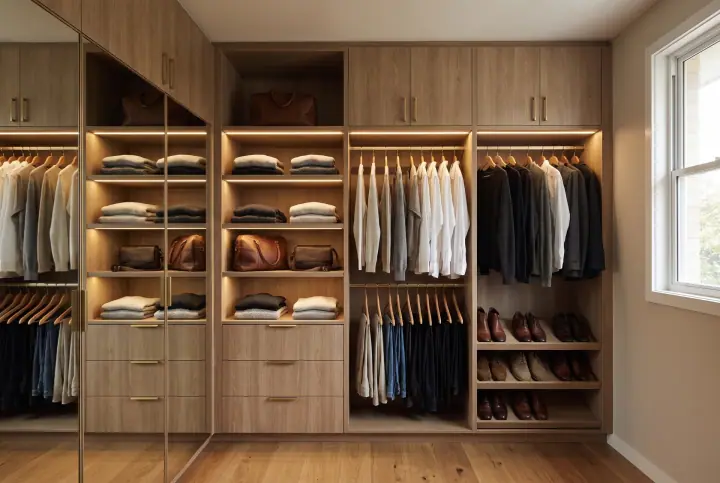
- Jumpers and knitwear, in stacks of three or four.
- Jeans and folded trousers.
- Handbags, standing up.
- Hats, on the top shelf.
- Luggage, spare bedding and the off-season, on the top shelf.
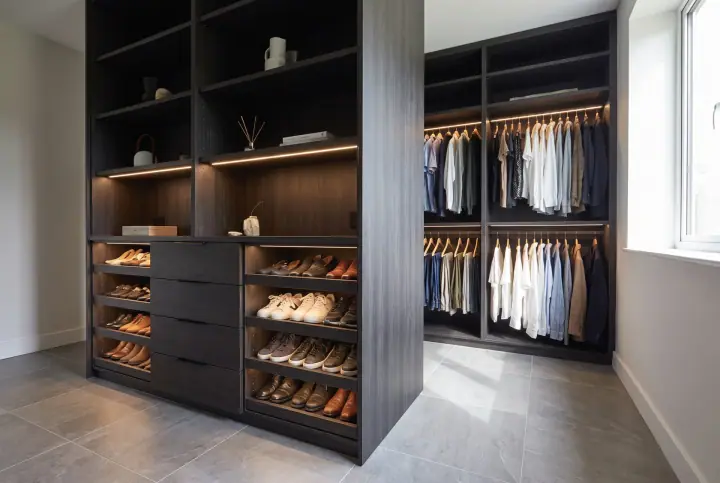
- Shoes, on angled or close-spaced shelves. See our shoe storage guide.
What belongs on a rail
Shirts, blouses, jackets, dresses, coats, and trousers if you prefer them folded over a hanger. Our internals guide covers hanging.
How many of each
Count what you own, then as a starting point for one person:
| Storage | Typical number | Width |
|---|---|---|
| Shallow drawers (150 to 200mm) | 2 | 450 to 600mm |
| Medium drawers (200 to 250mm) | 2 | 450 to 600mm |
| Deep drawers (250 to 300mm) | 1 to 2 | 450 to 600mm |
| Shelves for folded clothes | 3 to 4, at 300 to 400mm | 450 to 900mm |
| Top shelf | 1, at 400 to 500mm | Full width |
A drawer bank of five or six drawers is about 1,200 to 1,400mm tall, which leaves room for shelving above it in the same bay.
Drawers: the details that matter
- Runners. Ball-bearing, full-extension, soft-close. A drawer you cannot pull fully out has a back third you never see.
- Width. 450 to 600mm is comfortable. Wider than 900mm needs heavier runners and starts to sag.
- Depth. Match the wardrobe depth, usually 450 to 550mm internal.
- Fronts. Flat, matching the doors, with a finger pull or a slim handle.
- Position. At waist to chest height where you use them most, with the shallow drawers at the top.
Shelves: the details that matter
- Adjustable on shelf pins.
- Depth of 350 to 450mm for folded clothes. Deeper shelves lose things at the back.
- Spacing of 300 to 400mm for clothes, 250mm for bags and hats.
- Dividers on wide shelves to keep stacks apart.
- Edge finished to match, so the shelf edge looks like part of the cabinet.
A typical bay layout
For a 600mm-wide bay, floor to ceiling:
- Top shelf, 450mm high, for luggage.
- Three adjustable shelves at 350mm for jumpers and jeans.
- A drawer bank of five drawers: two shallow, two medium, one deep.
That bay, beside a double-hanging bay, holds most of one person’s wardrobe.
Drawers cost more than shelves
A drawer is a small cabinet with runners and a front; a shelf is a board on pins. If the budget is tight, start with the drawers you will use every day (underwear, socks, t-shirts) and put jumpers and jeans on shelves. Our cost guide explains the trade-off.
At the consult
Bring a sense of how much you fold versus hang. The designer lays out drawers and shelves to suit, with the drawer bank where it is handiest. The internals are made in our Blacktown factory and fitted by the licensed installer who designed them.