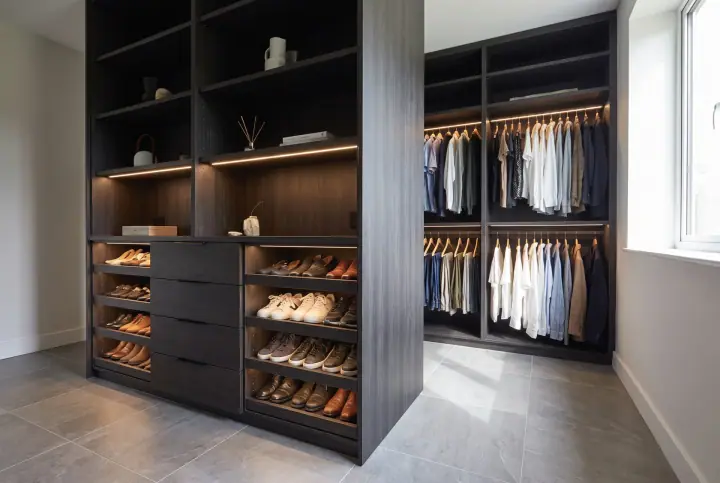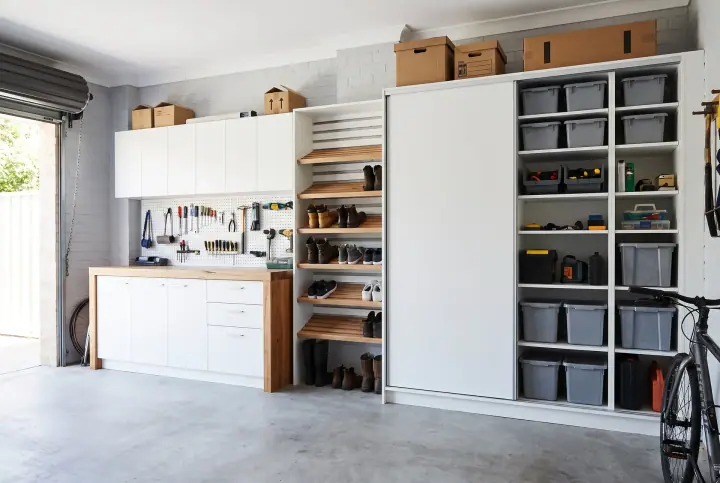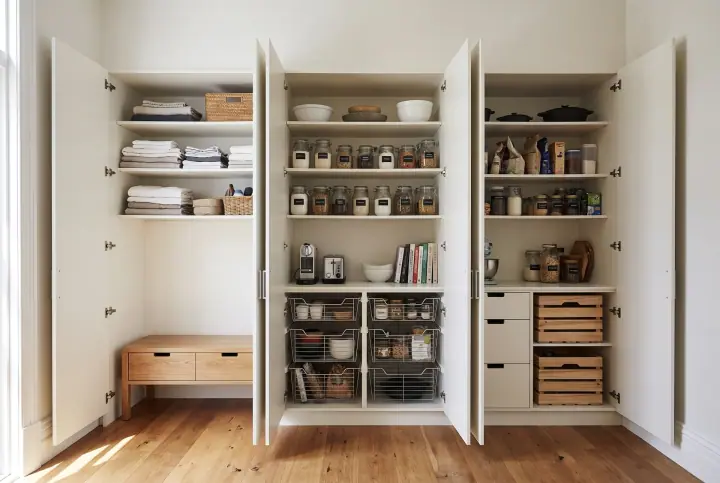
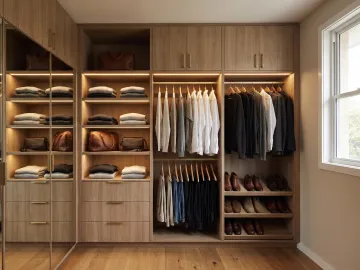
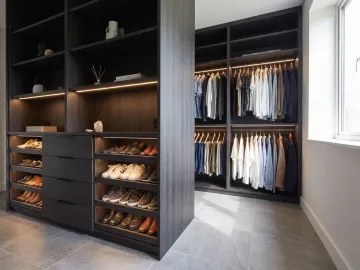
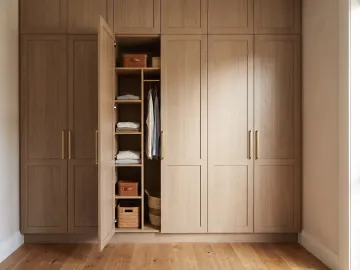

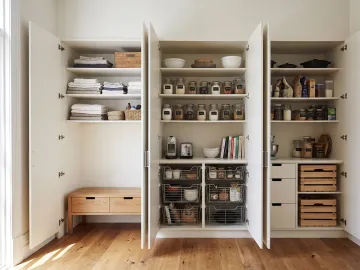
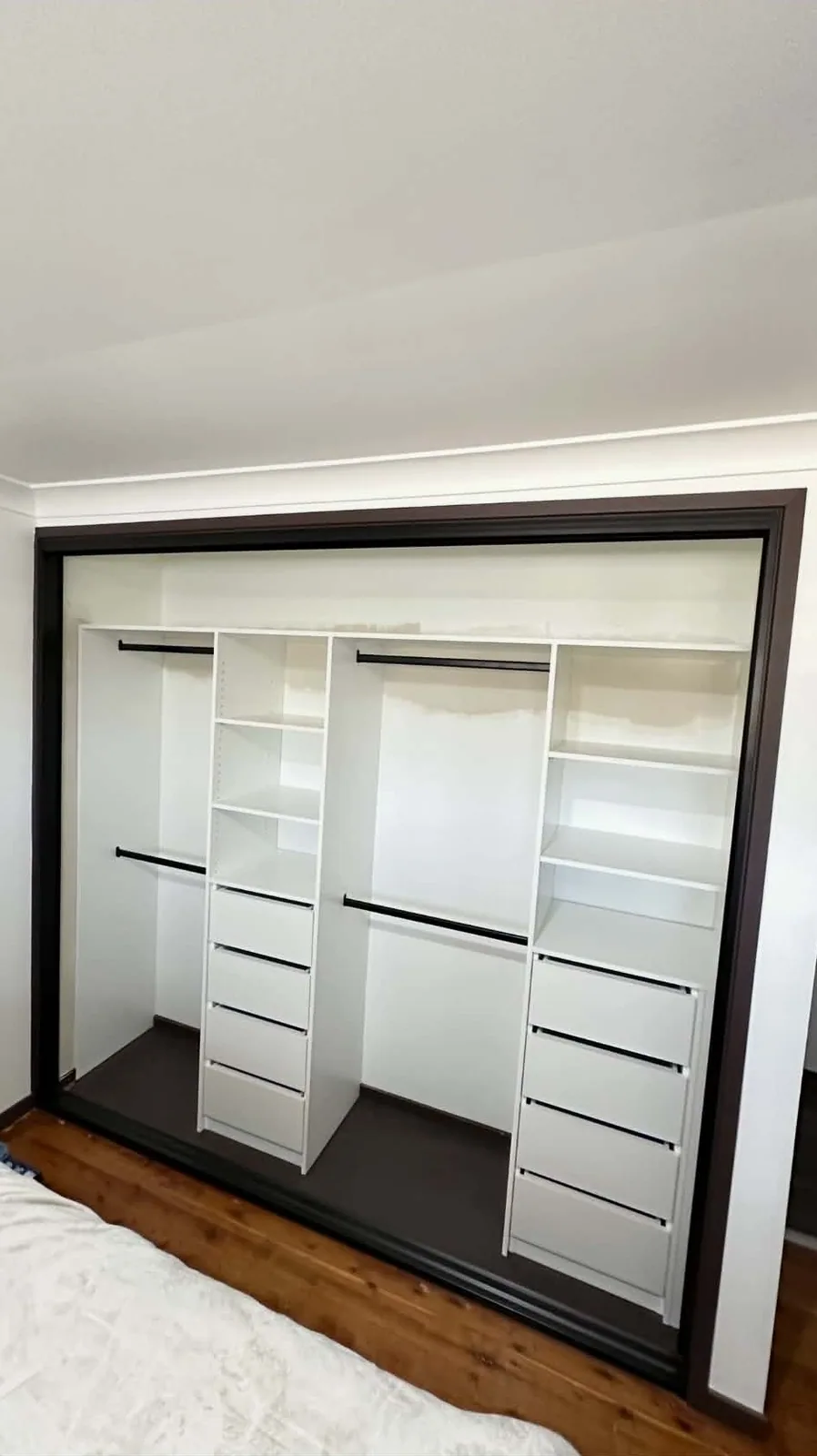
Short answer: twice a year, move the off-season out of the wardrobe into labelled boxes on the top shelf, in a spare-room robe or in a garage cupboard, and bring the current season into the band between knee and shoulder height. Design the top shelf and a tall bay for it, and the swap takes an hour.
Why rotate
A Sydney wardrobe holds a winter and a summer at once, and only one of them is in use. Coats, heavy knits and boots take a third of the hanging and shelving for nine months of the year. Move them out and the wardrobe is a third bigger, which for most people is the difference between crammed and comfortable.
The routine
Late April
- Wash or dry-clean the summer clothes that are going away.
- Fold them into boxes, labelled by person and type.
- Move the boxes to the off-season spot.
- Bring the winter boxes down and hang or fold the contents into the wardrobe.
- Edit as you go: what did not get worn this summer goes to the op shop.
Late October
The same in reverse.
An hour per person, twice a year.
Where the off-season lives
The top shelf
The shelf above the hanging, 400 to 500mm high, is the obvious place. Design it for boxes: 350 to 450mm deep, full width, with a step stool in the wardrobe. Two or three lidded boxes per person fit on a typical top shelf.
A tall bay
A 450mm bay with no shelves in a built-in, or in a hallway cupboard, takes stacked boxes or hanging bags for coats. Our guest room guide uses one.
The spare-room wardrobe
Where there is a spare bedroom, its wardrobe is the household’s seasonal store: a rail for coats and dresses in garment bags, shelves for boxes.
The garage
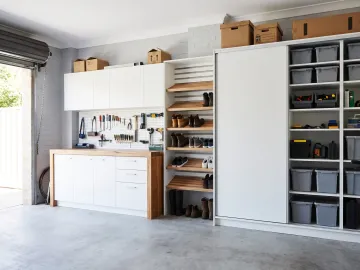
A garage cupboard in moisture-resistant board, with a door, keeps boxes dry and dust-free. Not for anything precious, and not for leather or wool unless the garage is dry. Our garage storage guide covers it.
Under the bed
Flat boxes under the bed for bulky knits. Fine as a stopgap; a shelf is better.
What to store it in
- Lidded plastic boxes for knits, t-shirts and swimwear. Clear, so you can see what is in them.
- Breathable fabric bags for anything that should not sweat: wool, silk, leather.
- Garment bags on hangers for coats and dresses, if there is a rail.
- Vacuum bags for doonas and bulky synthetics only. They crush structured clothes.
- Cedar blocks or lavender in every box. Moths like a dark, undisturbed box of wool.
- Labels on the end that faces out: name, season, contents.
Designing the wardrobe for it
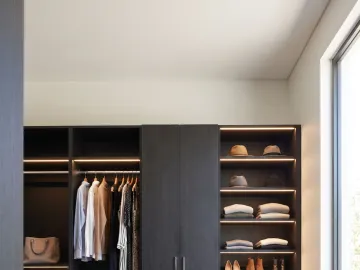
- A top shelf sized for boxes, with a strip of lighting above the rail so you can see up there.
- A tall bay or a hanging section that is empty half the year.
- Adjustable shelving that is moved to suit the season’s folded clothes.
- A step stool that lives in the wardrobe or the laundry.
Our internals guide covers the top shelf and the bays.
At the consult
Tell the designer you rotate by season, or want to. The top shelf is sized for boxes, a tall bay is planned, and the rest of the wardrobe is designed for one season’s clothes rather than two. The wardrobe is made in our Blacktown factory and fitted by the licensed installer who designed it.