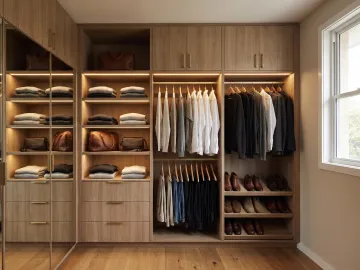
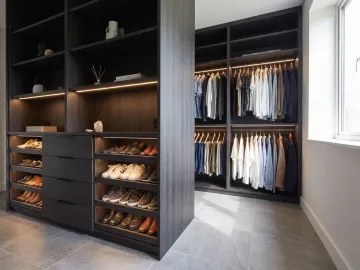
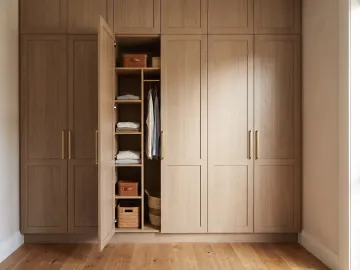
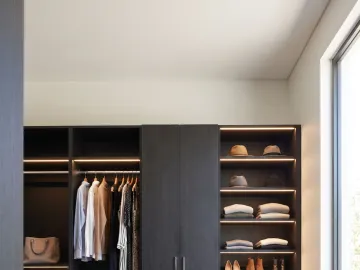
Short answer: accessories need their own places or they end up in a bowl on the dresser. A glass-top jewellery drawer with felt compartments, a pull-out tie rack and belt rack, a pull-out pant rack for trousers, shelves at 250 to 300mm for bags, and a shallow drawer with dividers for scarves and sunglasses. All of it fits inside a built-in or walk-in, in the narrow spaces beside the drawer bank.
Jewellery
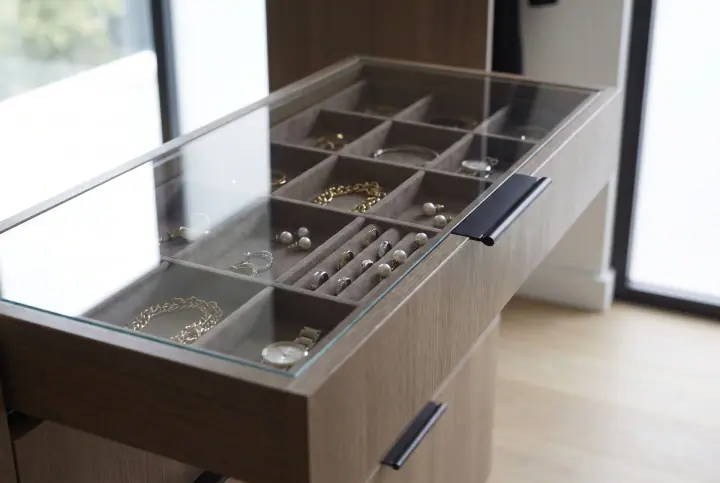
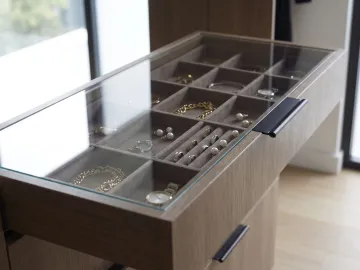
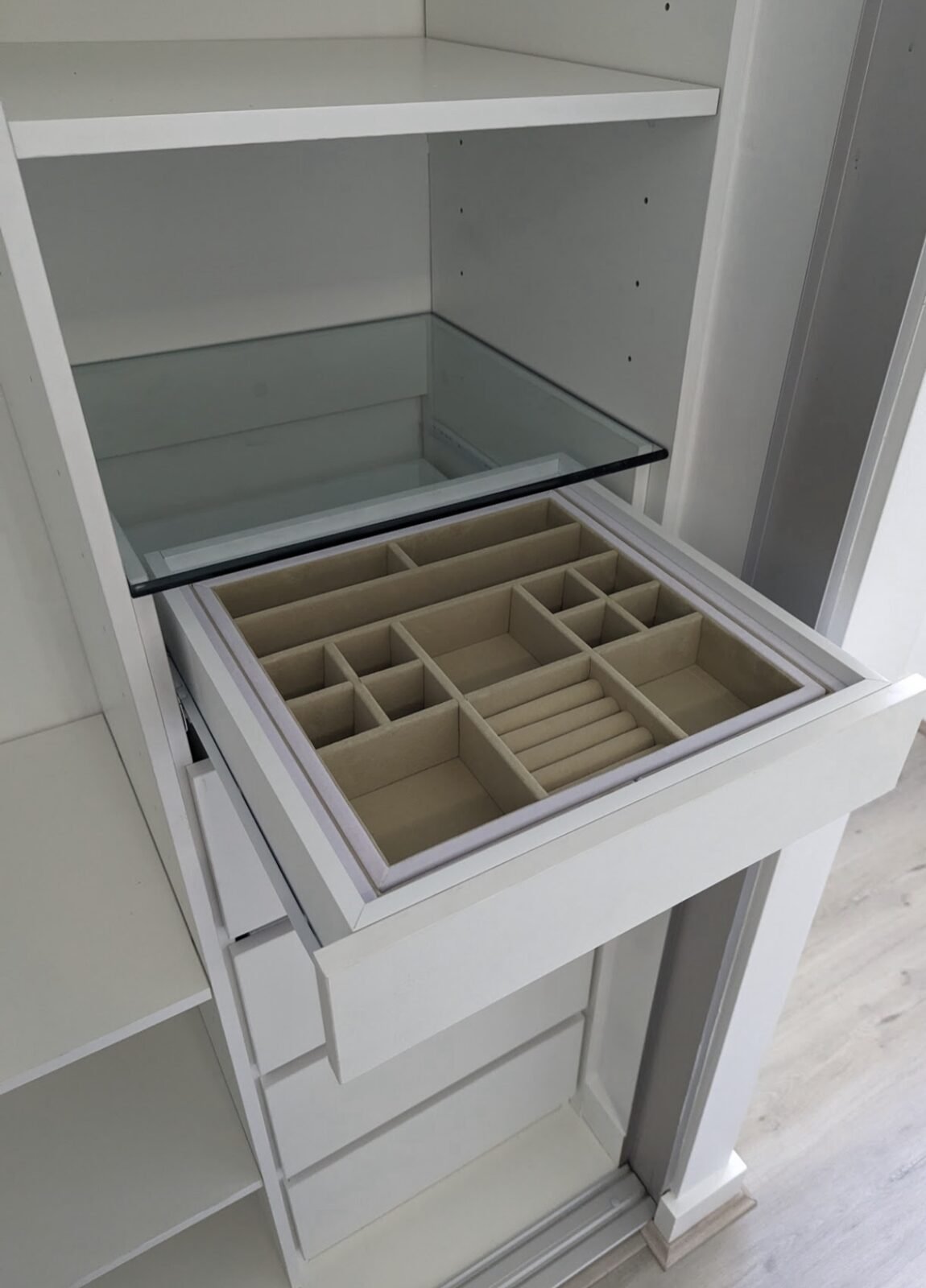
A jewellery drawer is a shallow drawer, 80 to 100mm deep, with a glass top and felt-lined compartments: ring rolls, slots for earrings, longer channels for necklaces and bracelets, a flat section for watches.
- Position: the top of the drawer bank, chest height.
- Glass top: you see everything without opening it, and dust stays out.
- Lock: optional, on request.
- Two drawers if the collection is large: one for everyday, one for the rest.
A plain shallow drawer with a felt insert does the same job at lower cost; the glass top is the upgrade.
Ties and belts
A pull-out tie rack is a slim frame with a row of hooks or clips that slides out from beside the drawer bank or inside a hinged door. A belt rack is the same with longer hooks. Both pull fully out on ball-bearing runners, so every tie is visible and nothing is behind anything.
- Position: beside the drawer bank in a 100 to 150mm gap, or on the back of a hinged door.
- Holds: 15 to 30 ties, 8 to 12 belts.
Trousers
A pull-out pant rack is a set of parallel bars on a frame that slides out. Trousers hang over the bars, flat, one pair per bar, with no crease from a hanger.
- Position: below a short-hanging rail or beside the drawer bank.
- Holds: 8 to 12 pairs.
- Alternative: trousers folded over hangers on a double-hang rail, which holds more but creases at the fold.
Bags
Handbags want shelves, standing up, with enough height to lift them out.
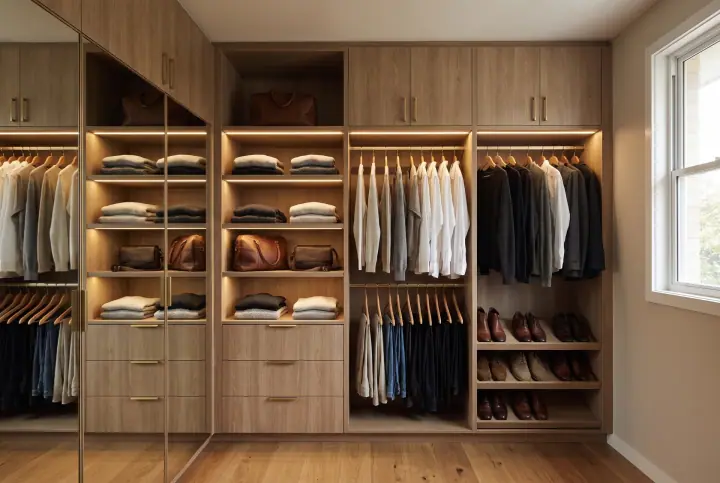
- Shelf spacing: 250 to 300mm for everyday bags, 350mm for totes.
- Depth: 350 to 400mm.
- Pull-out shelf: in a deep bay, a shelf on runners brings the back row forward.
- Dust bags for the ones used rarely, on the top shelf.
Scarves, sunglasses, hats
- Scarves: a medium drawer with dividers, rolled, or a pull-out rack with wide hooks.
- Sunglasses and watches: compartments in the jewellery drawer, or a shallow drawer with a divider insert.
- Hats: the top shelf, or a dedicated shelf at 250mm in a walk-in.
Shoes
Covered in our shoe storage guide.
Where it all goes in a built-in
A typical arrangement in a bay beside the hanging:
| Height | What |
|---|---|
| Top shelf | Hats, dust-bagged bags |
| Chest height | Glass-top jewellery drawer |
| Below it | Scarf drawer with dividers, then clothes drawers |
| Beside the drawer bank | Pull-out tie rack and belt rack in a 120mm gap |
| Below the short hanging | Pull-out pant rack |
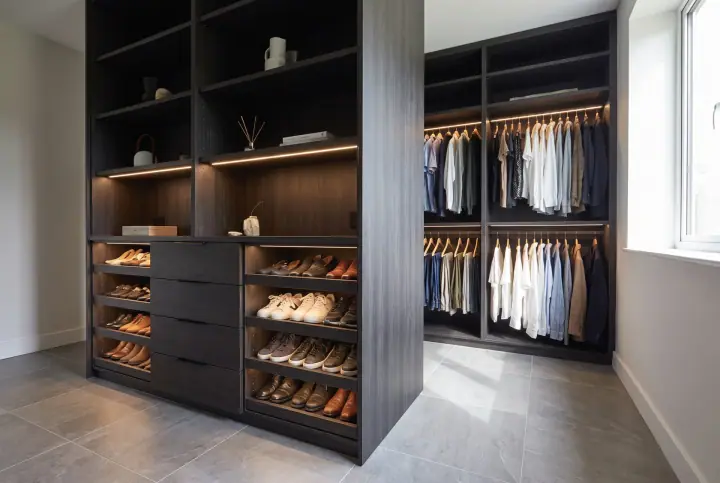
In a walk-in, the same pieces go in an island if there is one, or in the end-wall bay.
Lighting
A strip above the jewellery drawer makes the glass top worth having. Our lighting guide covers the options.
At the consult
Tell the designer what accessories you own and how many. Each piece is sized and placed in the layout, on ball-bearing runners, made in our Blacktown factory and fitted by the licensed installer who designed it. Every extra is optional; see the accessories page for each one in a real wardrobe.