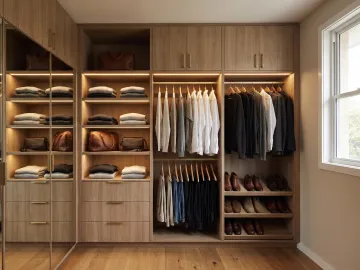
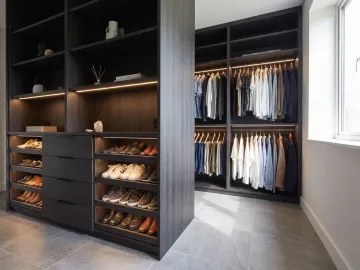
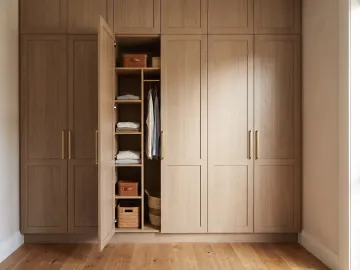
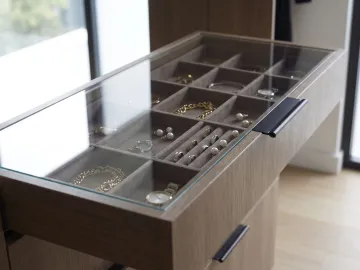
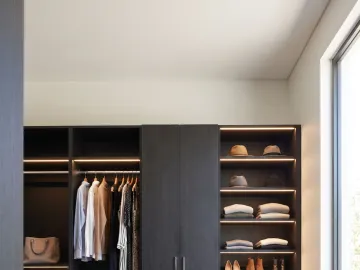
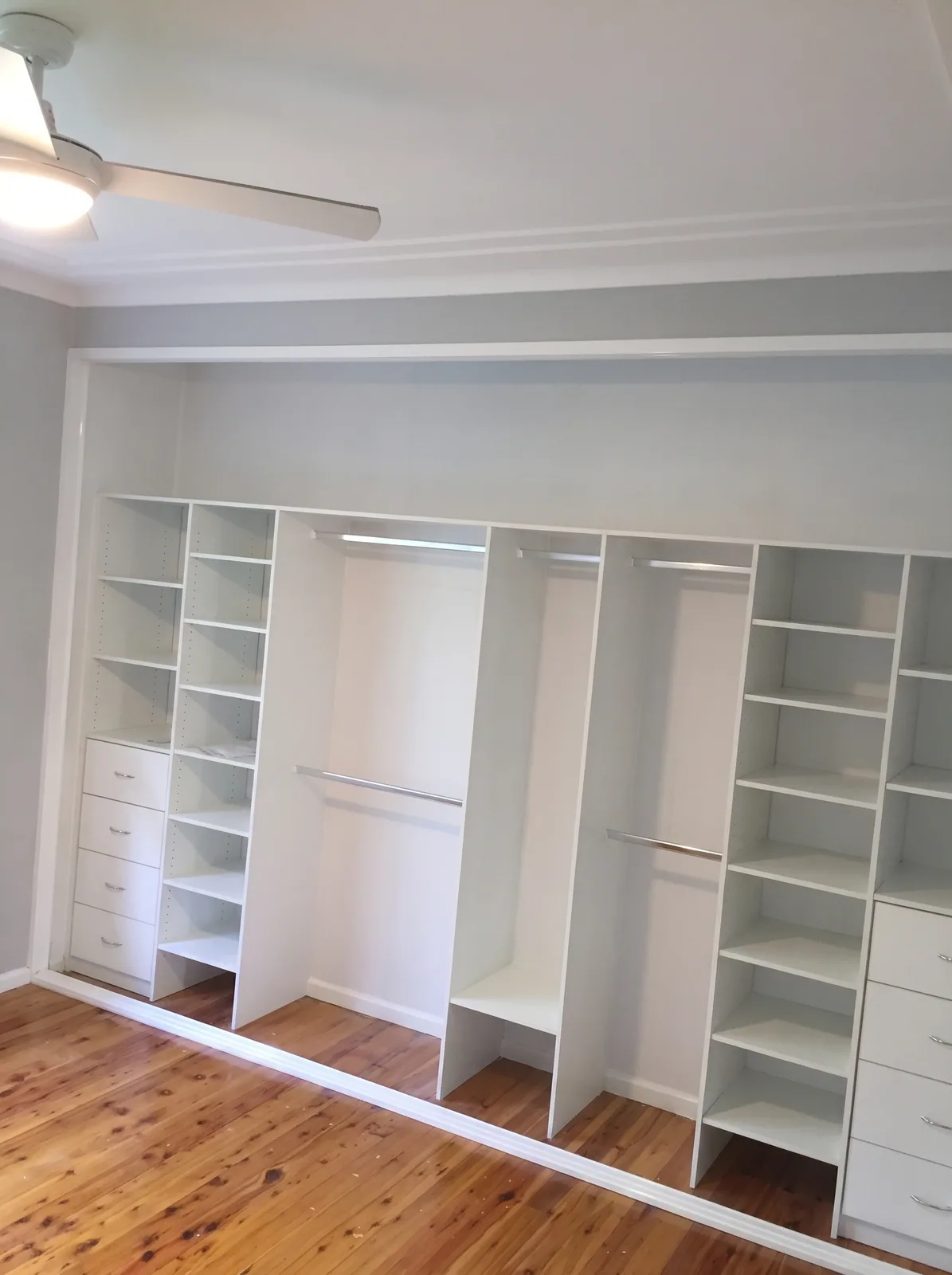
Short answer: the best wardrobe lighting is an LED strip under each shelf and along the top of the hanging, switched by a door sensor in a built-in or a motion sensor in a walk-in. It is a small addition that makes a dark wardrobe usable, and it is easiest to add when the internals are being designed, because the cabinetry can hide the cable.
Why wardrobes are dark
A built-in wardrobe faces away from the window, has a ceiling light behind you when you open the doors, and is 600mm deep. The back of every shelf is in shadow. A walk-in is worse: it usually has no window and one ceiling light in the middle of the floor, which lights the floor.
The fix is to put the light inside the storage, pointed at the clothes.
The four options
LED strip under the shelves
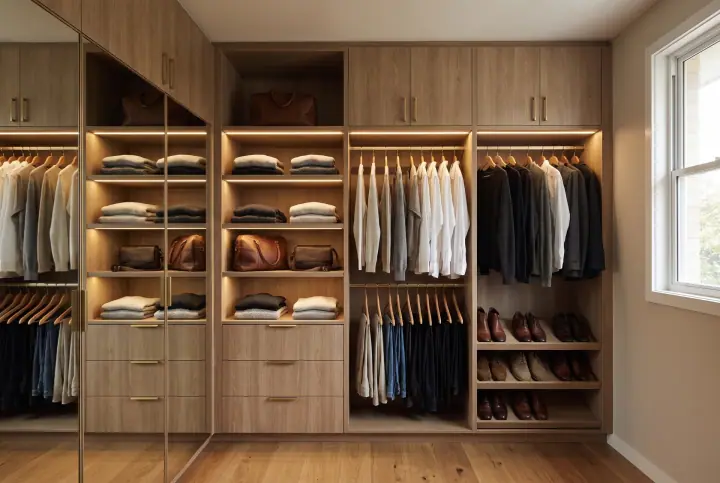
The workhorse. A thin aluminium channel with a diffuser is set into the underside of the top shelf and each shelf above a hanging section, so light falls down onto the rail. In a shelving bay, a strip under every second shelf is plenty.
- Pros: even light, no glare, hidden in the cabinetry, cheap to run.
- Cons: needs a channel built in, so best done at the design stage.
Lit hanging rail
A hanging rail with an LED strip built into the underside, pointing down through the clothes. Good for long hanging where there is no shelf close above the rail.
- Pros: light exactly where the clothes are.
- Cons: the rail is a specific product, so decide early.
Sensor switching
A door-contact sensor in a hinged or sliding robe turns the lights on when the door opens and off when it closes. A motion sensor in a walk-in turns them on when you step in and off a minute after you leave. Both mean you never leave the wardrobe light on.
Downlights in a walk-in ceiling
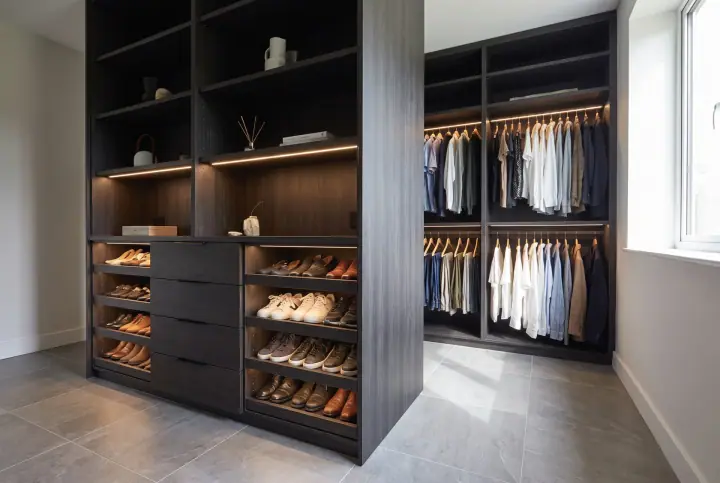
Two or three small downlights, placed over the walkway rather than in the centre of the ceiling, light a walk-in well enough on their own in a small room. In a larger walk-in they work with strips under the shelves.
Where to put the light, by wardrobe type
| Wardrobe | Put the light | Switch it with |
|---|---|---|
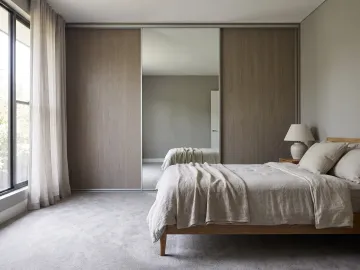
| Sliding robe | Strip under the top shelf, full width | Door sensor on each door |
| Hinged robe | Strip under the top shelf, or in the door reveal | Door sensor |
| Walk-in, one-sided | Strip under each shelf, lit rail | Motion sensor |
| Walk-in, two-sided | Strips both sides, downlights over the walkway | Motion sensor |
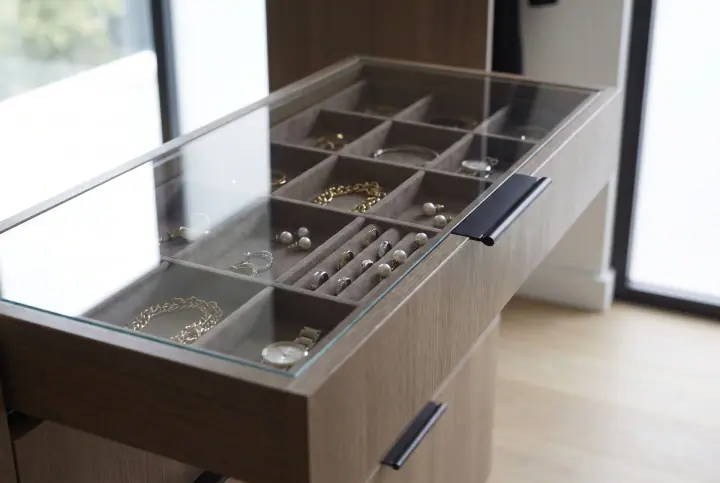
| Drawer bank | Strip above the top drawer, so the open drawer is lit | Door sensor or constant |
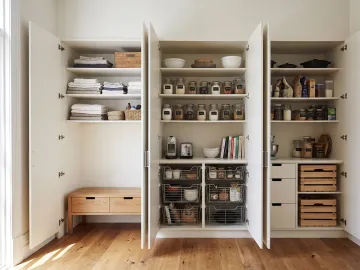
| Linen press or pantry | Strip under every second shelf | Door sensor |
Colour temperature and brightness
Warm white around 3000K suits a bedroom and flatters timber finishes. Neutral 3500K is a good compromise if you want to see colours accurately when choosing clothes. Avoid very cool white in a bedroom; it looks clinical.
Brightness is modest. A wardrobe strip is there to remove shadows, not to light the room. Diffused strips in a channel avoid the row of dots you get from a bare strip.
What it involves
The cabinetry is designed with channels and a route for the cable, usually down the back corner of a bay to a driver tucked above the top shelf or under the bottom shelf. The electrician connects the driver to a power point or hard-wires it, and fits the sensors. The timing is coordinated so the electrician comes after the cabinetry is installed. In a re-fit, the same approach works; the channels are simply set into the new shelves.
Worth doing?
If the wardrobe is in a dim room, or it is a walk-in with no window, lighting is the single cheapest change that makes it feel finished. Mention it at the consult and the designer will plan it into the internals.