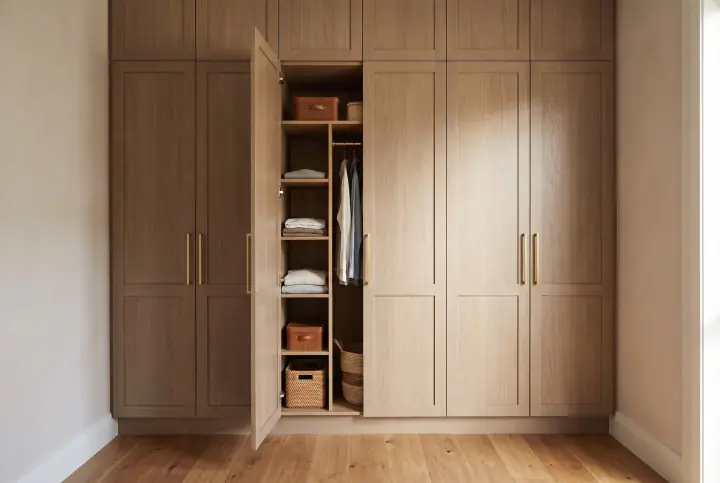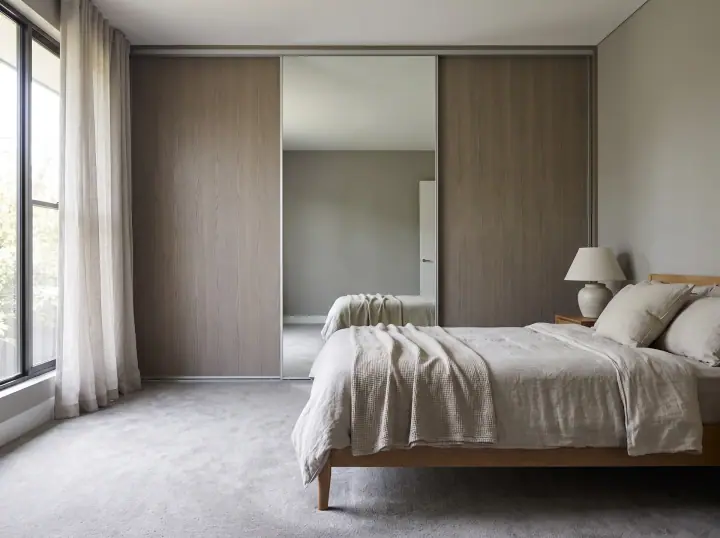
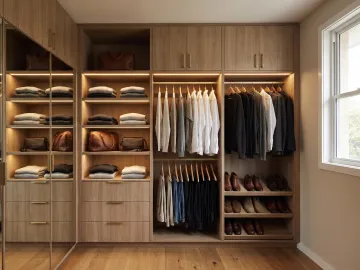
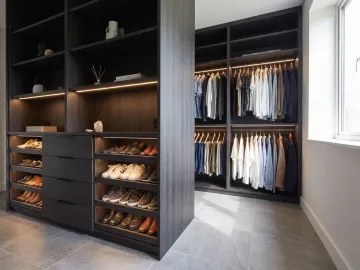
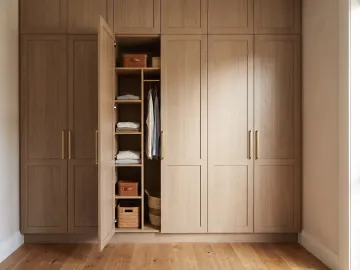
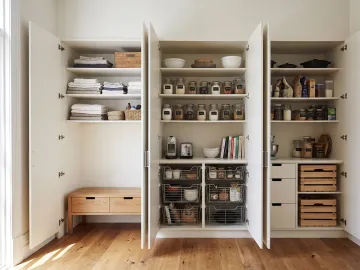
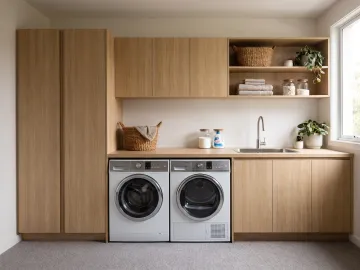
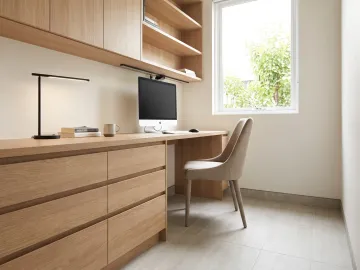
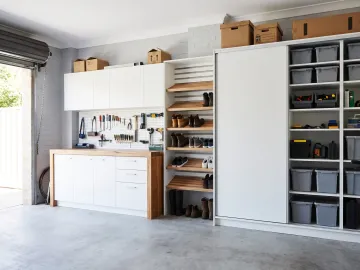
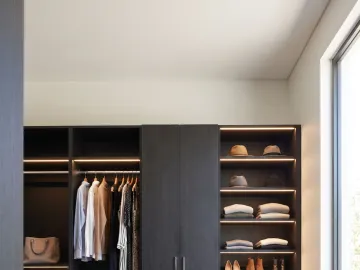
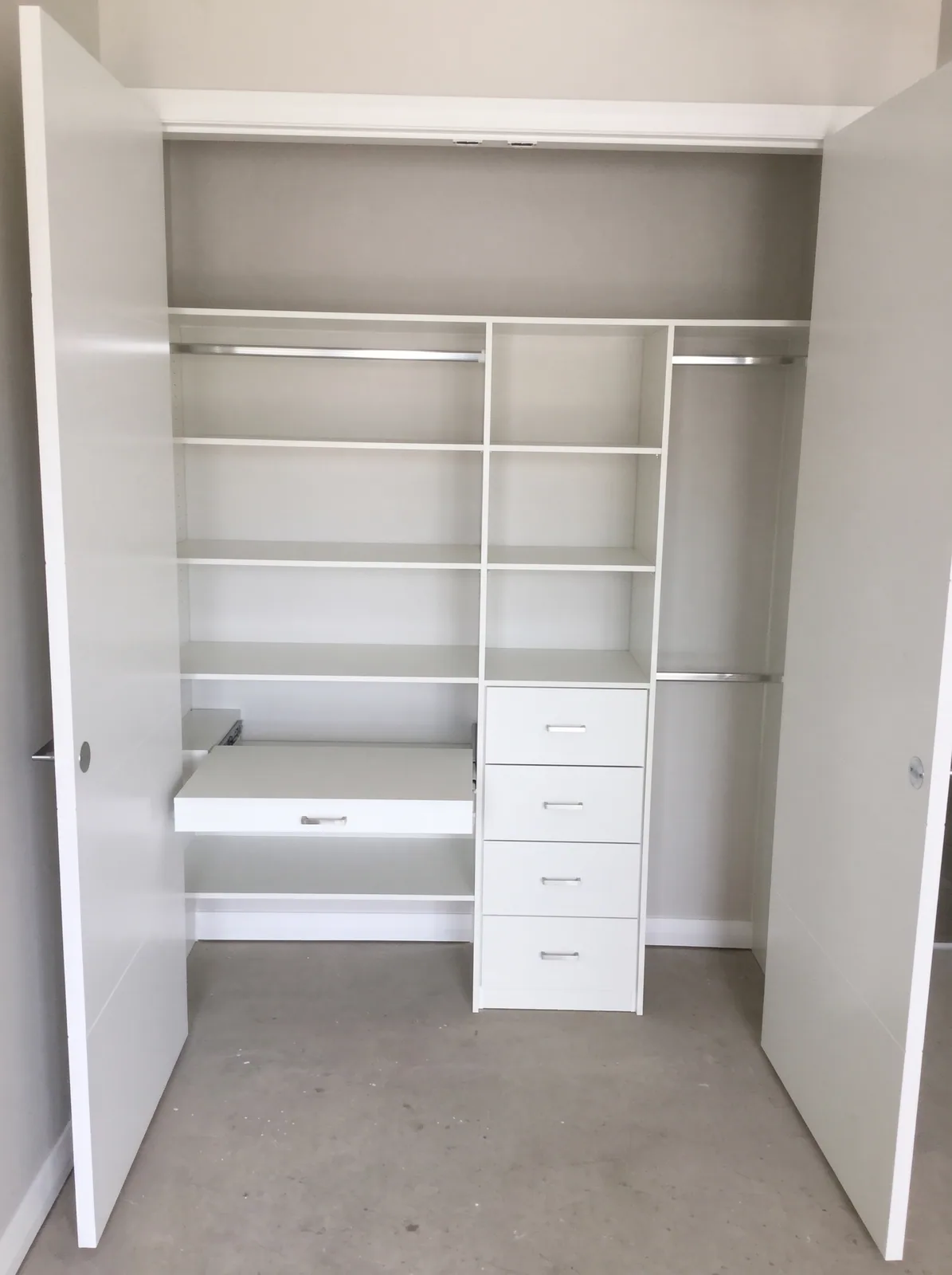
Short answer: hinged wardrobe doors come in three styles. Flat panel is the plain, modern door that suits any room. Routed shaker has a recessed rectangular profile machined into the face and suits traditional rooms and shaker kitchens. Raised profile has a raised centre panel for a more formal look. All three are made from polytec board in the same colour range, hung on concealed soft-close hinges.
Flat panel
A plain slab door, 16 or 18mm board, edged all round. With a finger pull routed into the edge it has no handle at all; with a slim handle it reads as a modern cabinet door.
- Suits: modern homes, apartments, any room where the wardrobe should disappear.
- Finishes: every colour in the polytec range. White matt is the quiet choice; woodmatt oak makes it a feature.
- Watch for: a long run of flat doors can look blank. Break it with a mirror panel or a woodmatt end door.
Routed shaker
A flat door with a rectangular recess routed into the face, leaving a raised frame around a flat centre, in the proportions of a traditional shaker door. The profile is machined into one piece of board, so there are no joints to open up.
- Suits: older homes with painted timber trims, Hamptons and country-style rooms, houses with a shaker kitchen.
- Finishes: matt colours show the profile best. White and soft greys are the usual choices.
- Watch for: a very small door looks odd with a shaker profile. Below about 400mm wide, use flat panel.
Raised profile
A door with a raised centre panel and a moulded edge, for a more formal, furniture-like look.
- Suits: formal bedrooms, traditional homes, anyone who wants the wardrobe to look like an armoire built into the wall.
- Finishes: matt white or cream, most often.
- Watch for: it is the busiest of the three. On a wide wardrobe, four or six raised-profile doors is a lot of detail.
Side by side
| Flat panel | Routed shaker | Raised profile | |
|---|---|---|---|
| Look | Plain, modern | Traditional, framed | Formal |
| Best with | Any kitchen or trim | Shaker kitchen, painted trims | Period trims |
| Handles | Finger pull or slim handle | Knob or handle | Knob |
| Cost | Base | A little more | A little more |
| Dust | Wipes flat | Collects in the recess | Collects on the moulding |
Matching the house
- Architraves and skirting painted white: white matt doors in any of the three styles.
- Shaker kitchen: routed shaker doors in the same colour, so the house reads as one.
- Timber-look kitchen: flat panel in a matching woodmatt.
- Period home: routed shaker or raised profile, white, with knobs rather than handles.
Our colours guide covers finishes in detail.
Handles
Flat panel doors take a routed finger pull (no hardware), a slim bar handle or a push-to-open catch. Shaker and raised-profile doors take a knob or a short handle, placed on the frame. Handles are chosen at the consult from a range and can be changed later.
Hinges and swing
All three styles hang on concealed, adjustable, soft-close hinges. A full-height door needs about its own width of clearance in front of the robe to swing; if the bed is close, our sliding vs hinged guide explains the alternative.
At the consult
The designer brings samples of each profile in your shortlisted colours, holds them against your trims and kitchen, and tells you which will sit best in the room. The doors are machined and edged in our Blacktown factory and hung by the licensed installer who designed them.