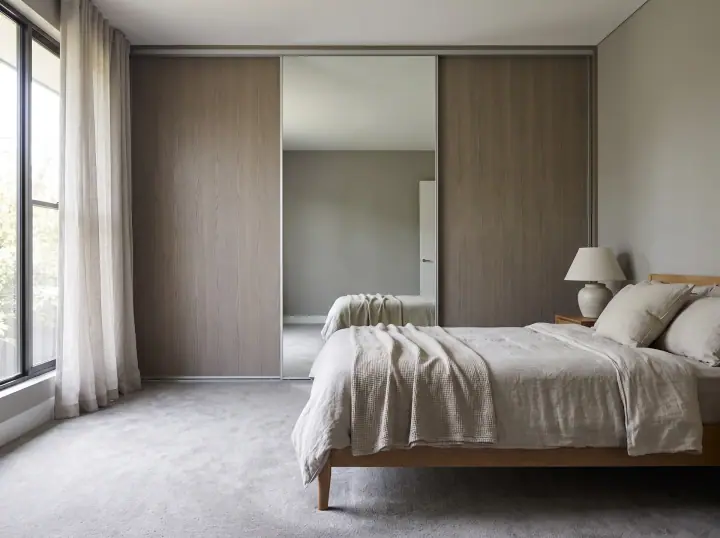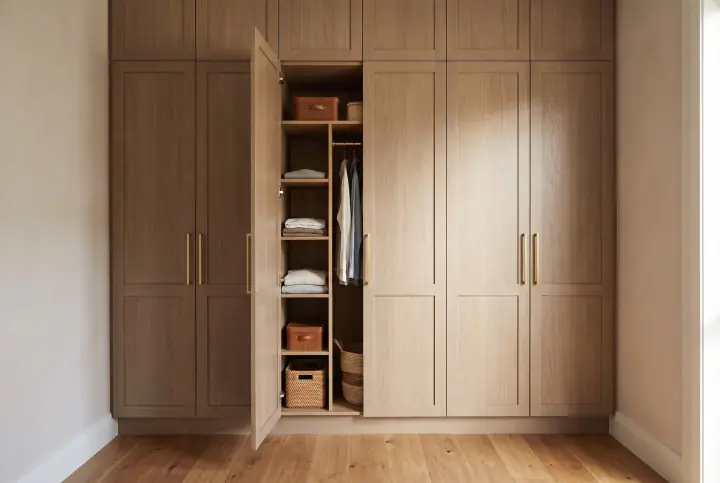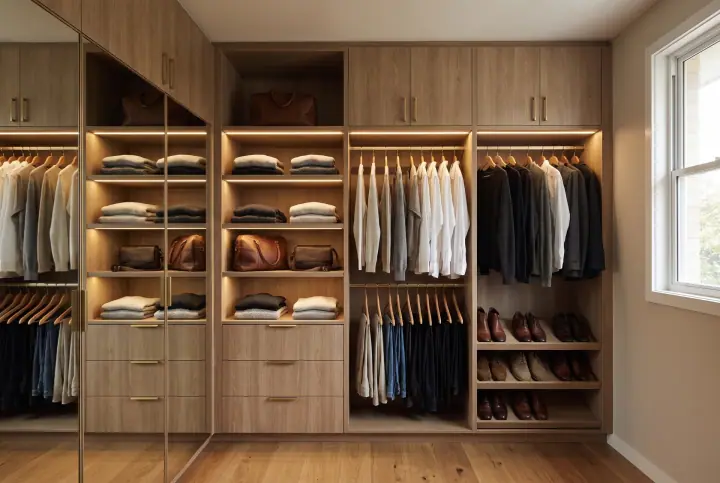
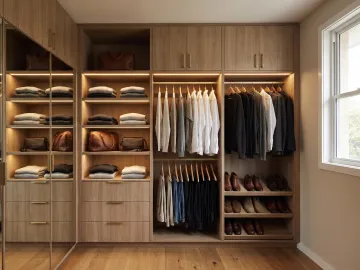
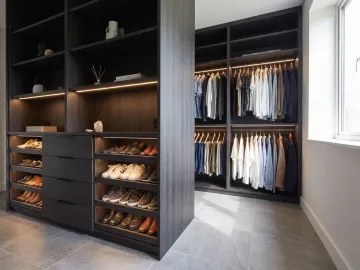
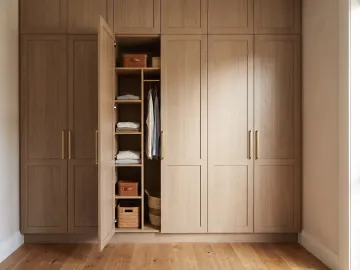
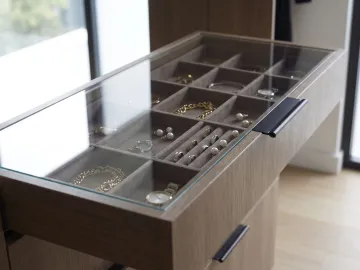
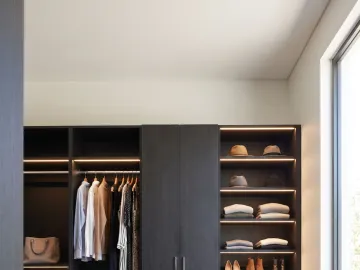
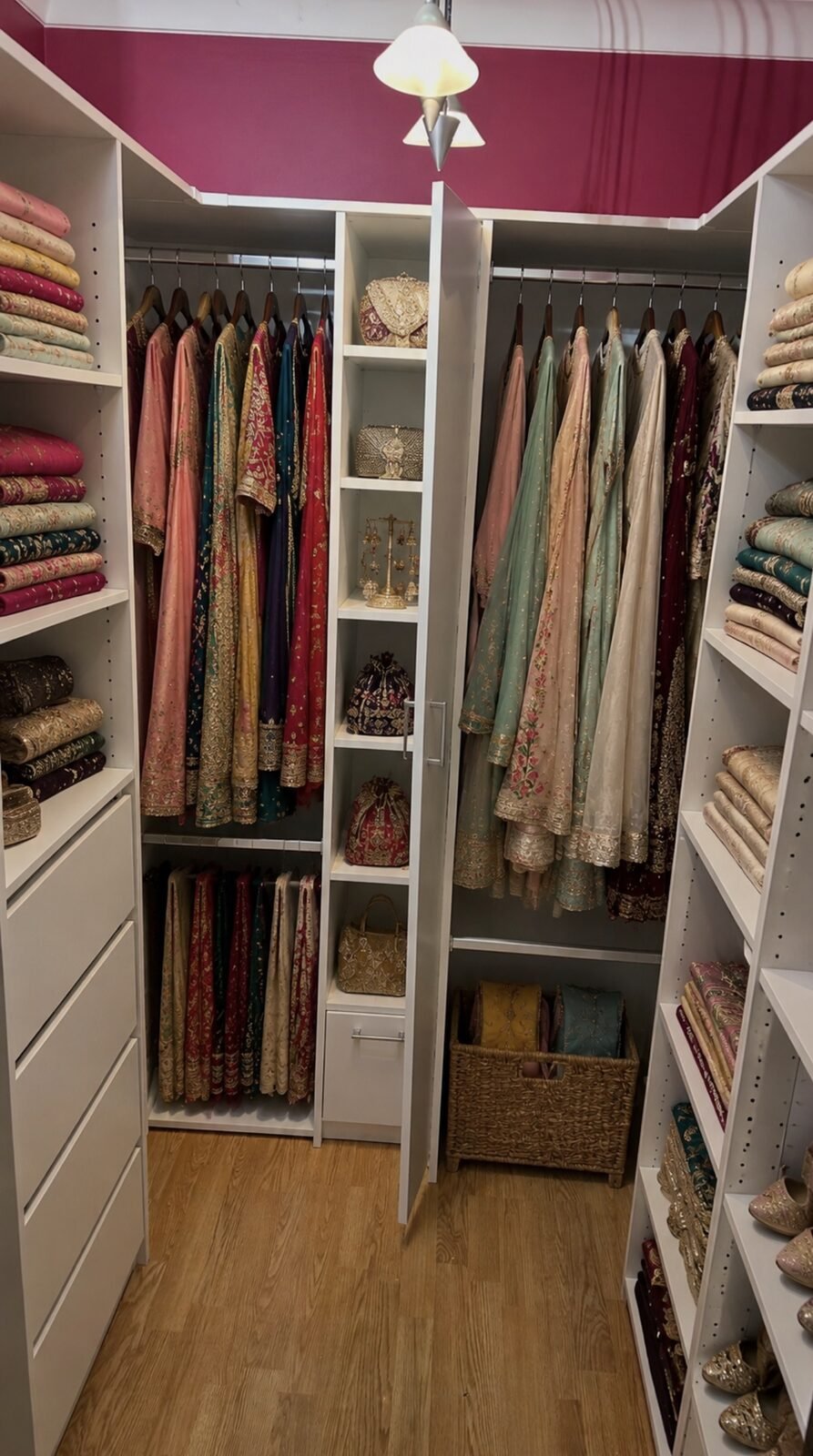
Short answer: choose the wardrobe colour for the room it lives in, not the showroom. In most bedrooms a matt white or a soft neutral makes the wardrobe disappear and the room look larger. In a walk-in, a woodmatt timber-look finish makes the storage feel like furniture. Mirror doors on a sliding robe open up a small room. Pick the finish by how the surface will be used, then the colour by what is already in the room.
Here is how to work through it, and what the polytec finish names actually mean.
Start with the room, not the colour chart
Look at what is fixed: the floor, the wall colour, the window trims, the skirting, the bed. The wardrobe has to live with all of them. Then ask:
- Should the wardrobe disappear or be a feature? A white sliding robe on a white wall disappears. A timber-look wall of hinged doors is a feature.
- How much light does the room get? A dark finish in a south-facing bedroom makes it darker. A mirror door doubles the light.
- Is this a bedroom you spend time in, or a cupboard you open twice a day? A guest room wardrobe can be plainer than a main bedroom’s.
The finishes, explained
The polytec wardrobe range is what we build with. The names mean:
- Matt. A flat, non-reflective solid colour. White, greys, soft neutrals, a few darks. The most forgiving and the most popular.
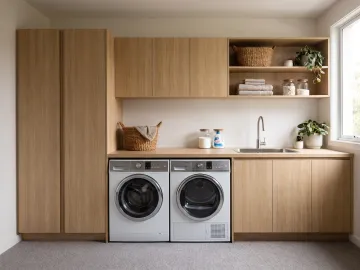
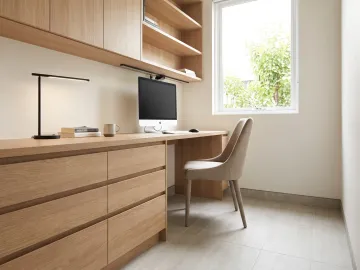
- Woodmatt. A timber-look print in a matt finish with a light surface texture. Oaks from blonde to smoked, walnuts and a few darker timbers. The usual choice for walk-ins and feature robes.
- Ravine. A deeper, grainy texture that follows the timber print. Reads as timber from across the room.
- Texture. A linen or fabric-like surface on a solid colour. Hides fingerprints, adds depth without a timber look.
- Mirror and white glass. Sliding doors only. Mirror reflects the room; white glass is a bright gloss panel. Both are glass on a frame, not board.
Our colours and finishes page shows the 25 colours we build with and the suppliers behind them.
Match or contrast with the trims
For hinged doors, matching the architraves and skirting (usually white) makes the wardrobe look like it was built with the house. This is the safe choice in older homes in Blacktown, Seven Hills and Toongabbie with painted timber trims.
For sliding doors, the doors are a feature in their own right. A woodmatt oak sliding door against white trims works; so does a mirror door with a slim frame colour-matched to the carcass.
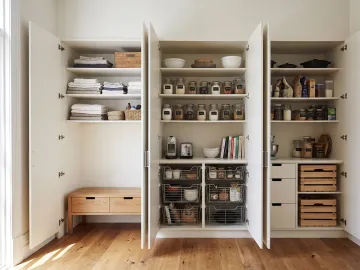
For walk-ins, there are no doors to match, so the colour is about the feel of the room. Light oak woodmatt with white shelving is the current favourite because it stays warm without closing the space in.
Three safe combinations
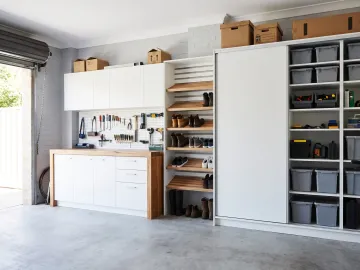
- White matt doors, white carcass. Any bedroom. Disappears, enlarges, never dates.
- Mirror centre door, white matt outer doors. A small bedroom. Light and reflection in the middle, calm either side.
- Blonde oak woodmatt throughout. A walk-in or a main bedroom feature wall. Warm, current, hides marks.
Colours that are hard to live with
- Very dark matt in a small, dim room. It will feel smaller.
- Strong colour on a wide sliding robe. Three metres of teal is a lot of teal.
- A timber look that fights the floor. Grey-oak doors on a red-brown timber floor rarely work. Match the undertone (warm with warm, cool with cool).
Mixing finishes
Mixing is fine when there is a reason. A woodmatt carcass with white matt doors keeps the inside warm and the outside calm. A hinged tower in a texture finish beside sliding mirror doors breaks up a long wall. More than two finishes in one wardrobe usually looks busy.
See it in your room
Colour charts lie. A sample held against your wall in the afternoon light tells the truth. The designer brings samples to the onsite consult and will say plainly if a colour you like will fight the room. The wardrobe is then made to that colour in our Blacktown factory and installed by the same person who helped you choose it.