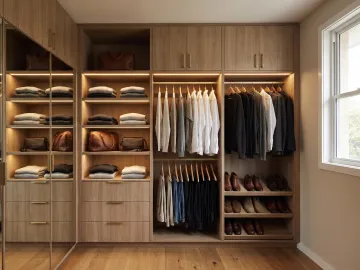
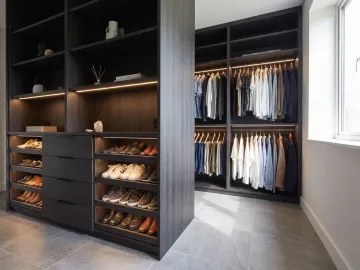
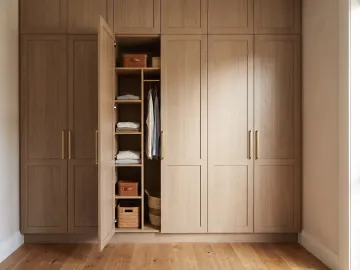
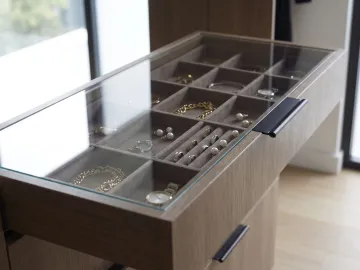
Short answer: a flat-pack wardrobe is a standard module you fit a room around; a custom wardrobe is made to the room. Flat-pack wins on price and on taking it with you. Custom wins on fit (floor to ceiling, wall to wall), materials, hardware, internals designed for you and lifespan. For a home you own, custom is the better long-term buy; for a rental or a short stay, flat-pack is the sensible one.
Fit
Flat-pack frames come in fixed widths and heights, usually around 2,000 to 2,360mm tall. A 2,400mm or 2,700mm ceiling leaves a gap above; a 2,500mm recess with 1,000mm modules leaves a gap beside. The gaps are either left or hidden with filler strips.
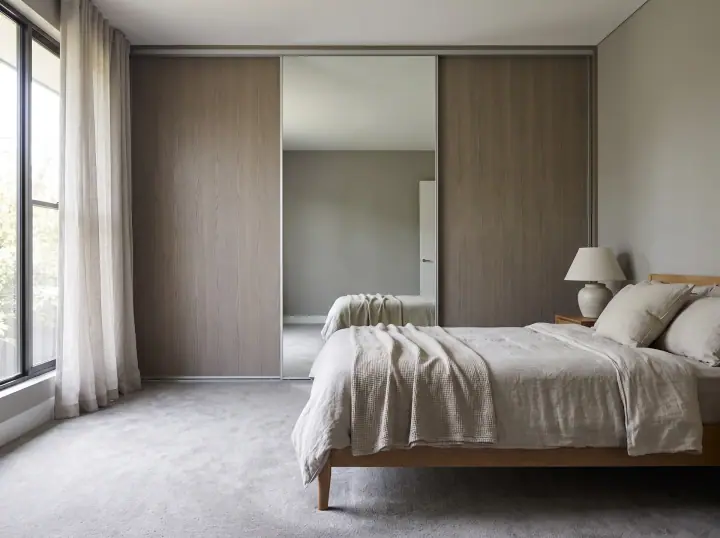
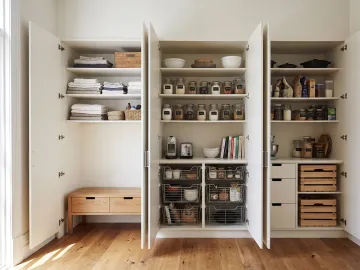
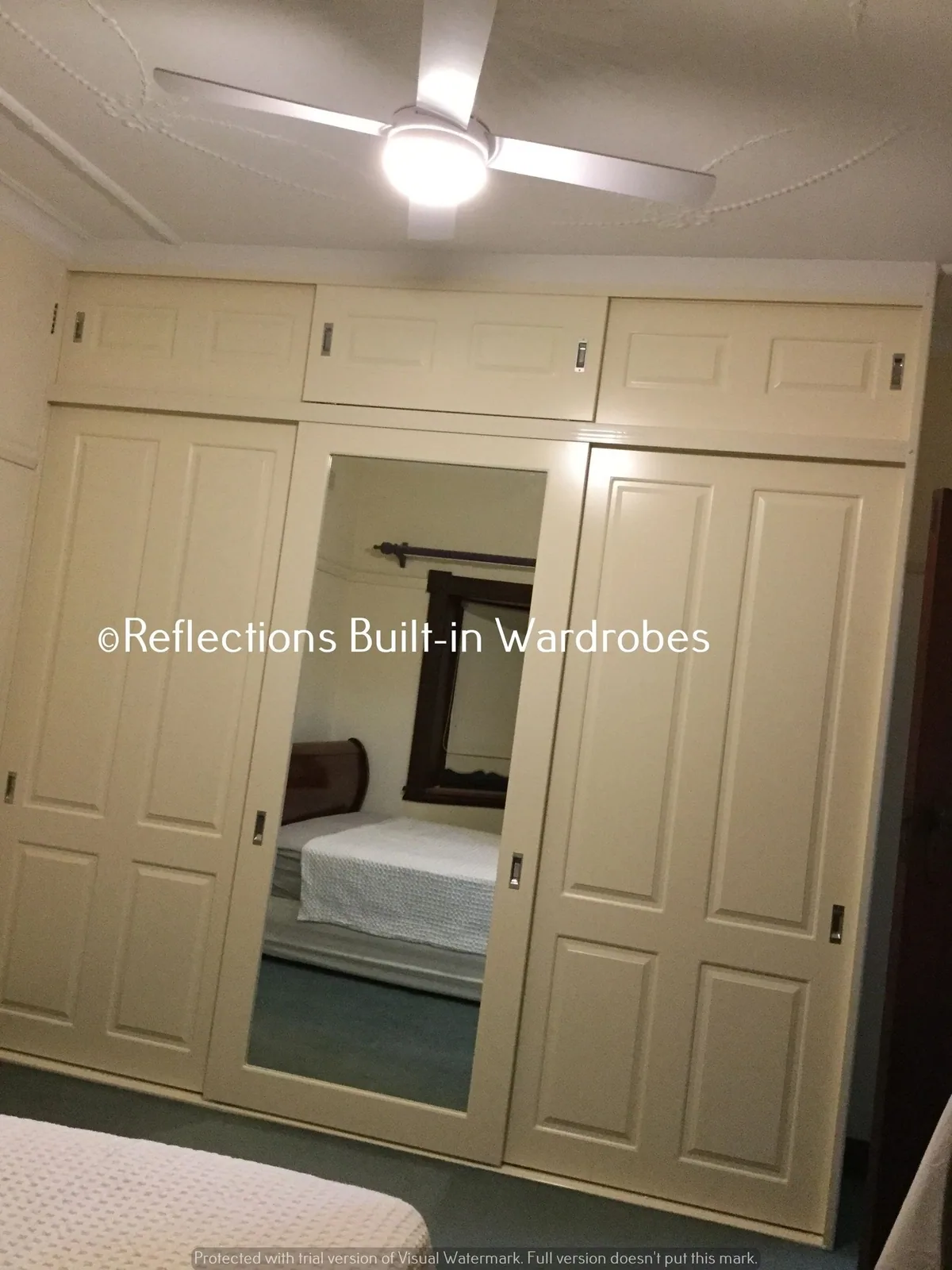
A custom wardrobe is measured onsite and made to the opening. Floor to ceiling, wall to wall, scribed to walls that are not square. Nothing is left over.
Materials
| Flat-pack | Custom | |
|---|---|---|
| Carcass | Thin board, melamine face, hardboard back | 16mm or 18mm board throughout |
| Sliding doors | Thin board or framed panels | polytec 9mm wardrobe board, mirror or glass |
| Shelves | Thin board, may sag over time | Thicker board, adjustable |
| Edges | Thin edge tape | Matched edging on every visible edge |
Hardware
Flat-pack sliding doors typically run in a floor channel on plastic wheels, which is why they jump the track as they wear. Custom sliding doors hang from the top on ball-bearing rollers in an aluminium track. Flat-pack drawers use basic runners; custom drawers use ball-bearing soft-close runners. The hardware is the difference between a wardrobe that works in ten years and one that does not.
Internals
Flat-pack internals are the manufacturer’s inserts: rails, shelves and drawers in fixed sizes that fit the module. They are flexible within those limits.
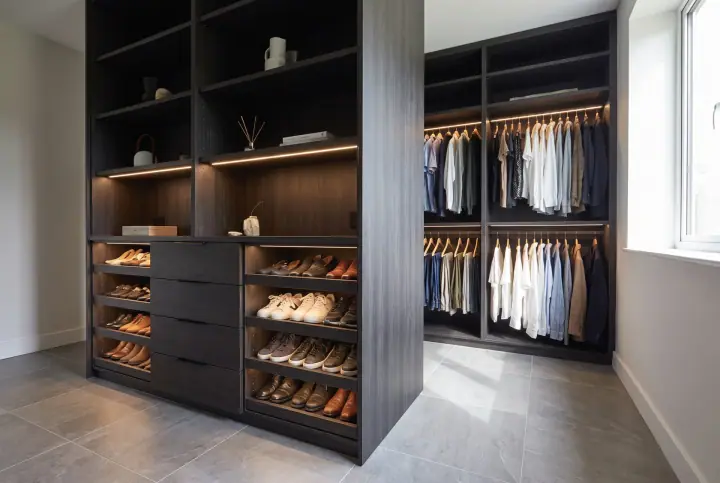
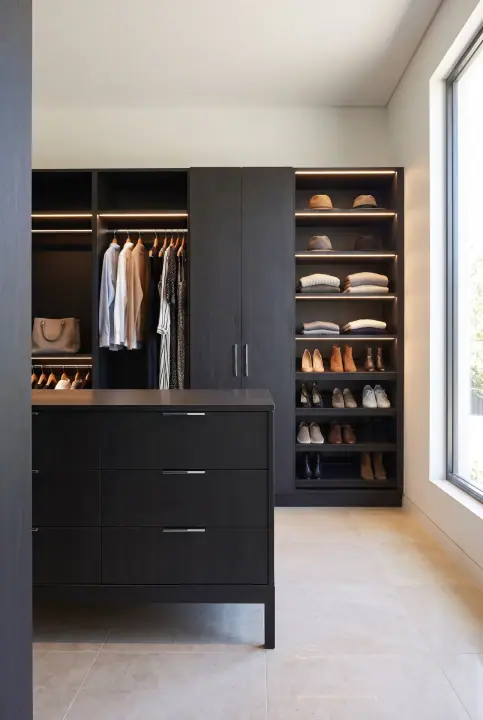
Custom internals are designed around what you own: the rail heights set to the person, the drawer bank where it is useful, shoe shelving sized to the pairs, long hanging only as wide as needed. Our internals guide explains the thinking.
Installation
Flat-pack is assembled by you, or by a handyman, on the bedroom floor. It is a day of your time and the result depends on the floor being level and the walls square, which in Western Sydney homes they often are not.
A custom wardrobe is installed by the person who measured and designed it. Levelled, fixed to the wall, scribed to the skirting and cornice, doors adjusted.
Lifespan
A flat-pack wardrobe is designed to a price. Shelves bow, door wheels wear, edge tape lifts. Most are replaced within ten years. A custom wardrobe in 18mm board with ball-bearing hardware is designed to last the life of the house, and Reflections backs the workmanship with a 10-year guarantee.
Cost
Flat-pack is cheaper to buy, often by a wide margin for a single wardrobe. The gap narrows when you add the inserts, the sliding doors, delivery and someone to assemble it, and it narrows further over time if the flat-pack is replaced. Our cost guide explains what drives a custom quote.
When flat-pack is the right answer
- You rent, and the owner will not approve a built-in.
- You will move within a couple of years.
- The budget is firm and the wardrobe is a stopgap.
- There is no recess, and you want something you can take with you.
When custom is the right answer
- You own the home and plan to stay.
- The opening is an odd size, has a bulkhead, or the walls are out of square.
- The ceiling is 2,400mm or higher and you want the top used.
- The wardrobe has to hold a lot. Floor to ceiling makes the difference.
- You want sliding doors that still glide in ten years.
Replacing a flat-pack with a custom robe
A common job. The flat-pack comes apart and goes (we can organise disposal), the recess is measured, and a custom robe is made to it. The gaps the flat-pack left become storage.
At the consult
If you are deciding between the two, the designer will measure the opening and tell you what a custom robe would hold there, and what it would cost. Every Reflections wardrobe is made in our Blacktown factory and fitted by the licensed installer who designed it.