

Short answer: wardrobes get damp when warm bedroom air meets a cold wall behind them and the moisture has nowhere to go. Keep a gap behind the clothes, do not pack the wardrobe full, give it some airflow, and keep damp things out of it. On a known cold wall the wardrobe can be built with a ventilated gap behind. Mould already there is cleaned, then the cause is fixed, or it comes back.
Why it happens
A built-in on an external wall, especially a south-facing brick wall in a 1960s to 80s home, is cold. Warm, moist air from a sleeping, breathing household drifts into the wardrobe, meets the cold back and condenses. Clothes packed against the back absorb it. Doors stay closed. Nothing dries. After a winter, there is a musty smell and, in the worst case, mould on the back panel and on leather and wool.
Newer homes are not immune: apartments with poor ventilation and homes with the bedroom door closed and the windows shut all winter do the same.
Design against it
- A ventilated gap behind the carcass on a cold external wall: the cabinetry set 20 to 30mm off the wall with vents at top and bottom of the back, so air moves behind.
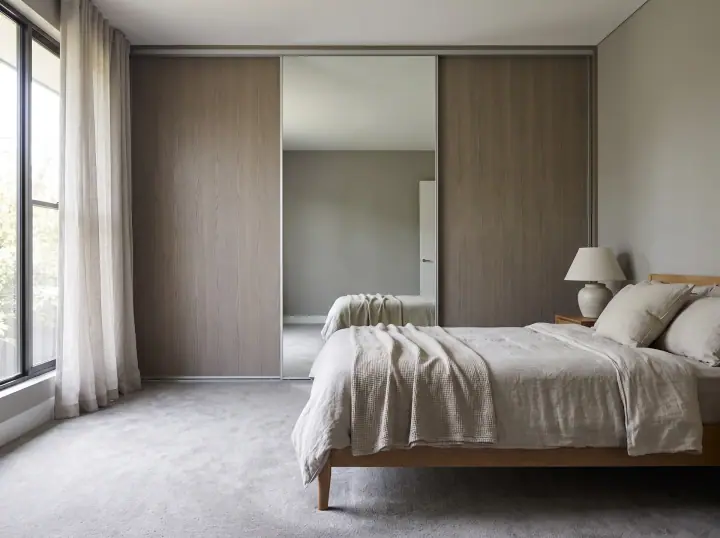
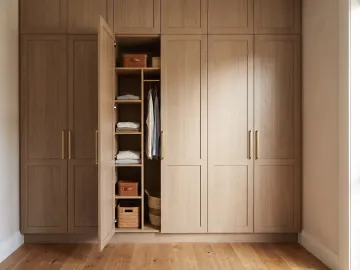
- Sliding doors, which have small gaps at top and bottom that let air move, rather than tightly fitted hinged doors.
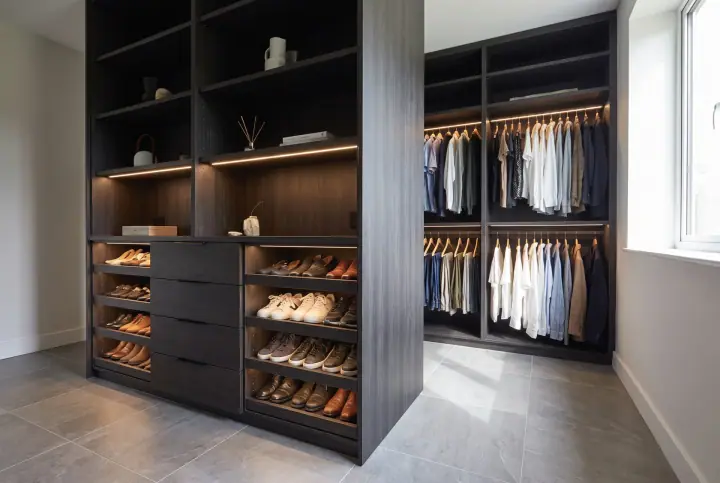
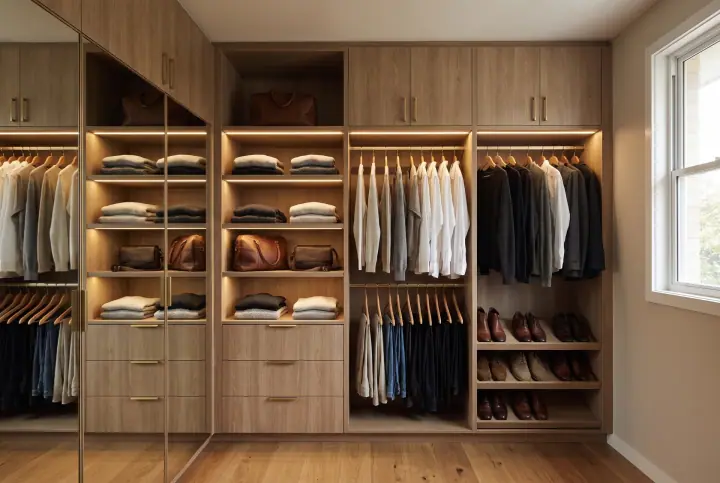
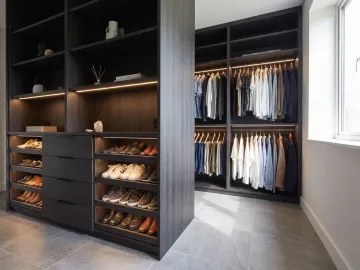
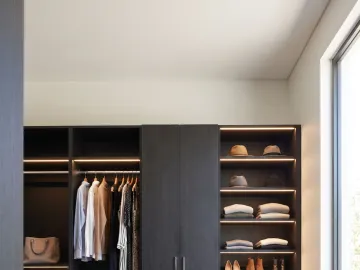
- Open shelving or a walk-in where the room is prone to damp. Open storage breathes.
- No carcass against the floor on a slab in an older home: a plinth lifts it clear.
- Lighting on a sensor adds a little warmth, which does no harm.
Use against it
- Leave a hand’s width between the clothes and the back panel.
- Do not fill it. A wardrobe at two-thirds capacity has air in it.
- Put away clean, dry clothes only. A damp towel or gym bag in a closed wardrobe is where it starts.
- Open the doors for an hour on a dry day, especially in winter.
- Open the bedroom window when the weather allows.
- A moisture absorber on the top shelf in a damp season.
- Cedar or lavender for the smell and the moths.
If there is already mould
- Empty the wardrobe. Wash or air everything.
- Wipe the inside with a cloth and a solution of white vinegar and water, or a mild detergent, then dry it fully with the doors open and a fan.
- Find the cause: the cold wall, the closed room, the damp things. Fix that, or the mould returns.
- If the back panel is stained through, it is a job for the installer: the panel is replaced and the carcass is ventilated.
Mould on the room’s wall behind the wardrobe is a building problem (rising damp, a leak, no insulation) and needs a builder, not a wardrobe.
Materials
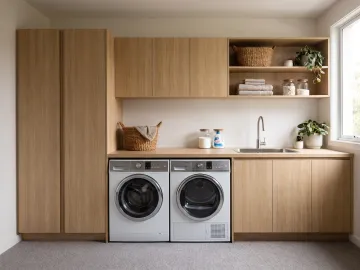
The carcasses are melamine-faced board, which wipes clean and does not feed mould the way raw timber or plaster does. Laundries and garages use moisture-resistant board. Neither is a substitute for airflow.
Walk-ins
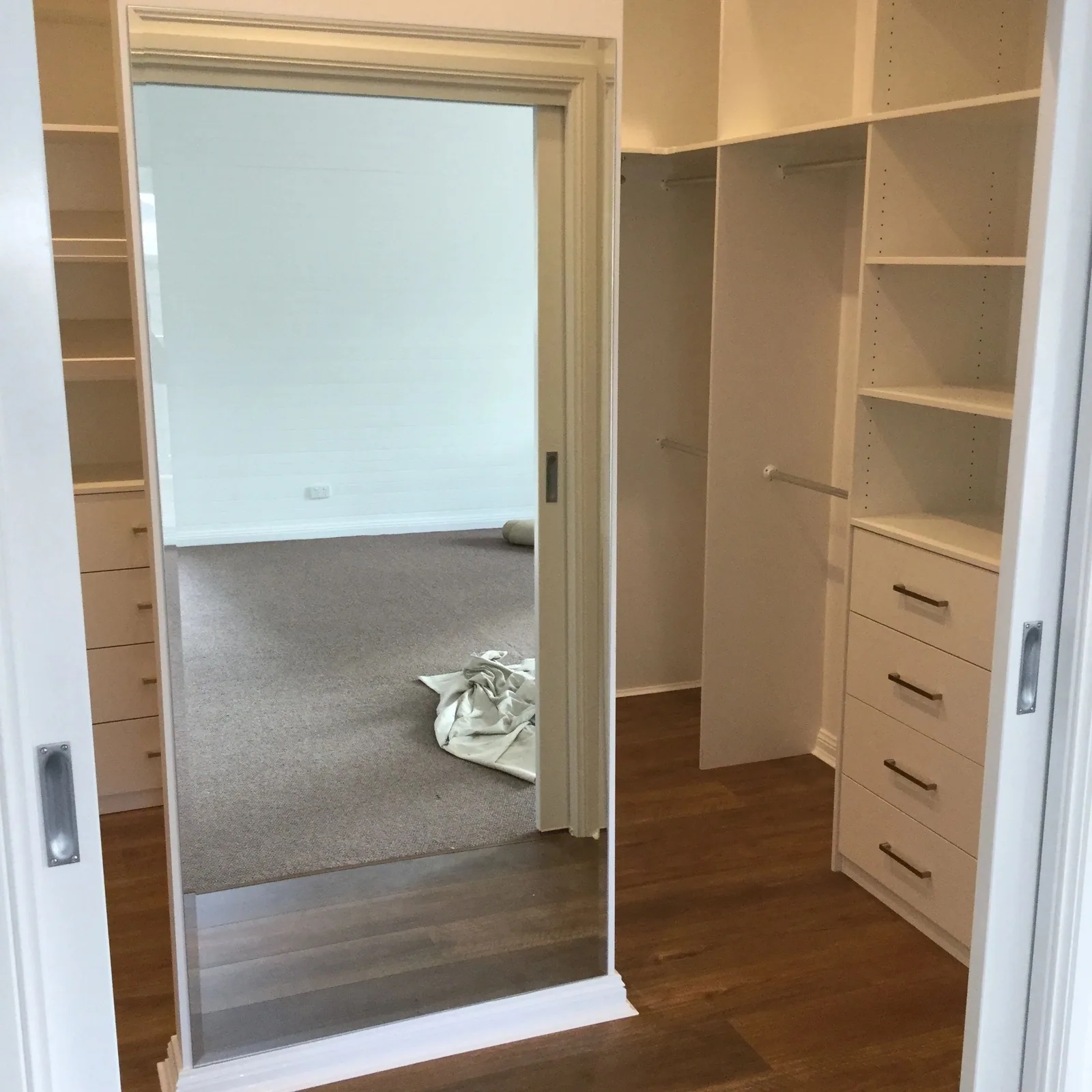
A walk-in with open shelving is the best-ventilated wardrobe there is. The risk is a walk-in with no window and a closed door: leave the door open, or add a vent or a small exhaust fan if the room is humid.
At the consult
Tell the designer if the wall is cold or the room gets damp. A ventilated back, sliding doors and a plinth are small design decisions that keep the wardrobe dry. The wardrobe is made in our Blacktown factory and fitted by the licensed installer who designed it, and our care guide covers looking after it.