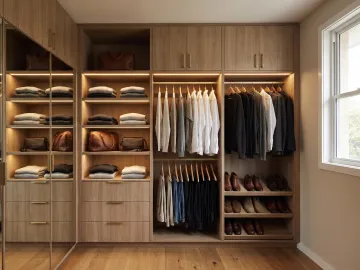
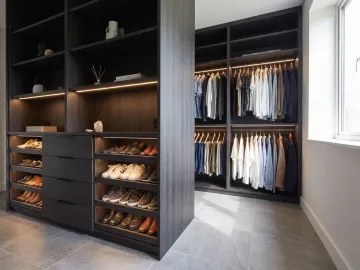
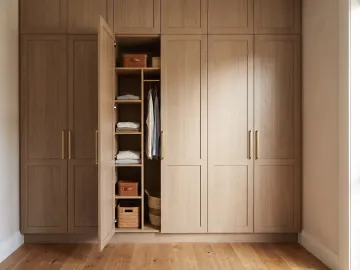

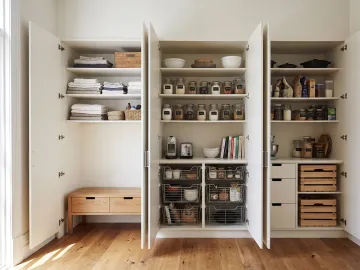
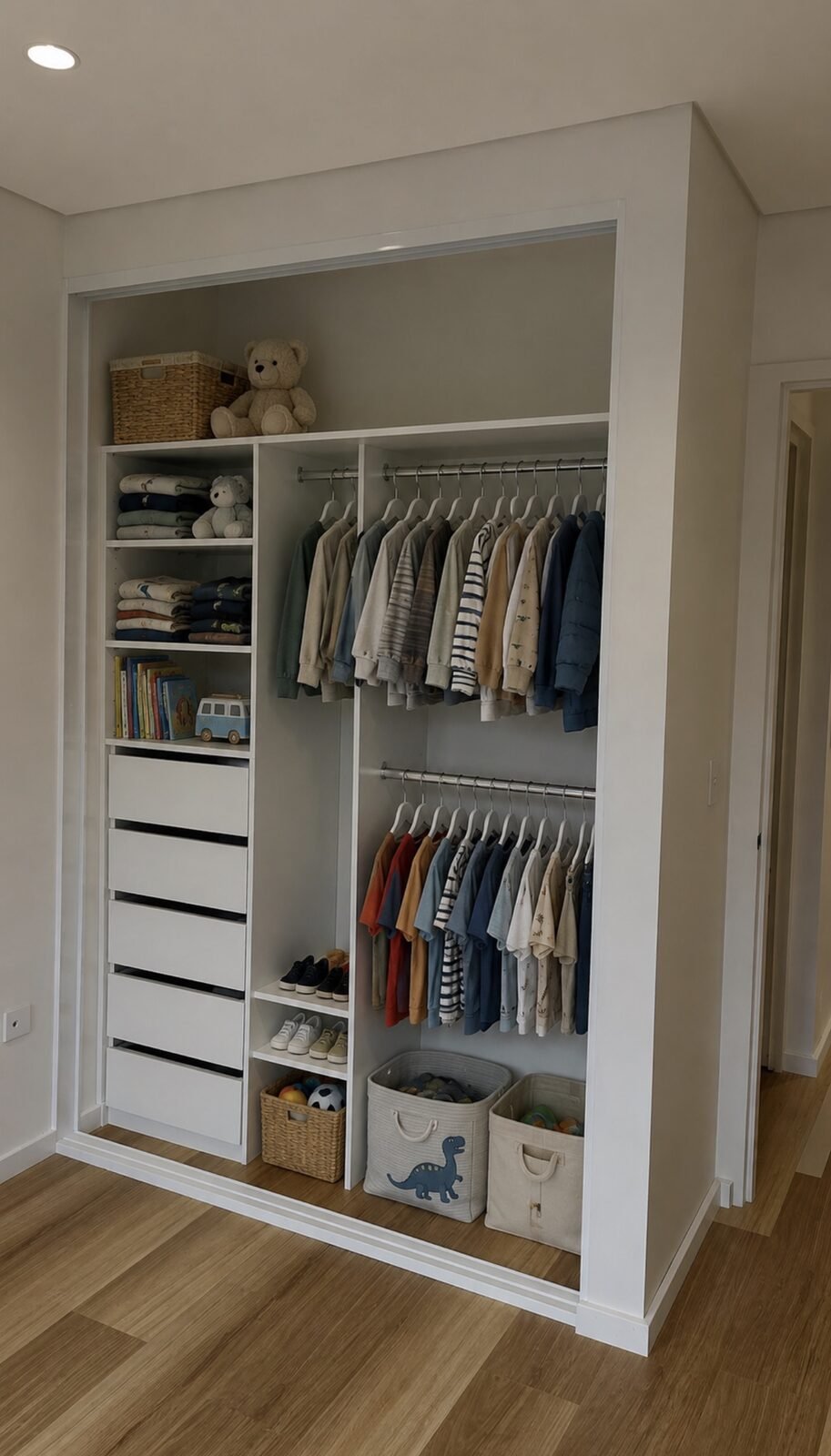
Short answer: the hardware is the part of a wardrobe you cannot see and the part that decides how long it works. Ask for sliding doors hung from the top on ball-bearing rollers in an aluminium track, drawers on full-extension ball-bearing soft-close runners, and concealed soft-close hinges on hinged doors. Handles are a matter of taste; the rest is not.
Sliding door tracks
Two systems exist:
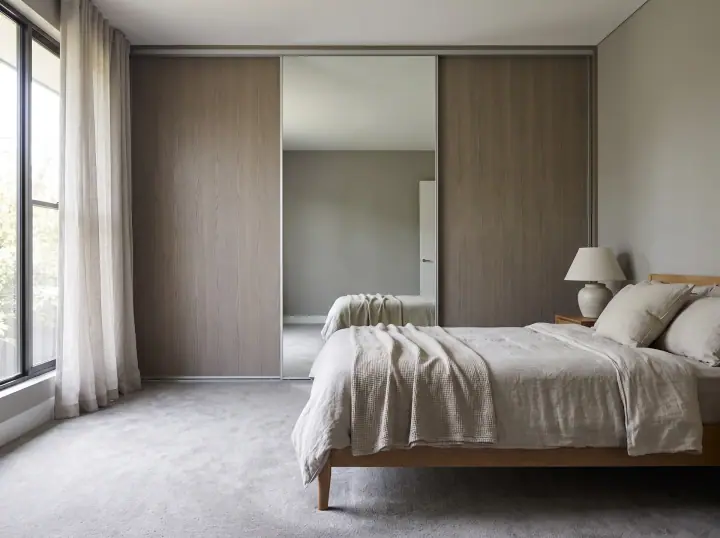
Top-hung on an aluminium track. The door hangs from rollers at the top, with a guide at the bottom. Ball-bearing rollers, an extruded aluminium track, and the weight carried from above. The door glides and cannot jump out.
Bottom-rolling in a floor channel. The door sits on wheels in a channel on the floor. Cheaper, and the standard on flat-pack and older wardrobes. The channel fills with dust, the wheels wear, and the door jumps.
Ask which one you are getting. Mirror and glass doors are heavy and need the top-hung system to work for long.
Drawer runners
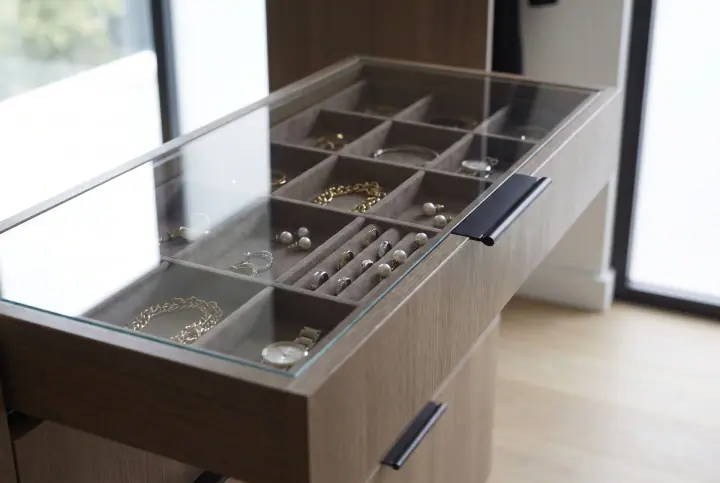
Ball-bearing, full-extension, soft-close. The drawer slides out all the way so you can see the back, carries a full load of jeans without sagging, and closes itself from the last few centimetres. This is the standard on Reflections drawers.
Roller runners. A plastic wheel in a metal channel, three-quarter extension. Cheaper, and fine for a light drawer, but a loaded drawer sags and the back of the drawer is never reachable.
Drawer runners are the second-most-used moving part in a wardrobe after the doors. They are not the place to save.
Hinges
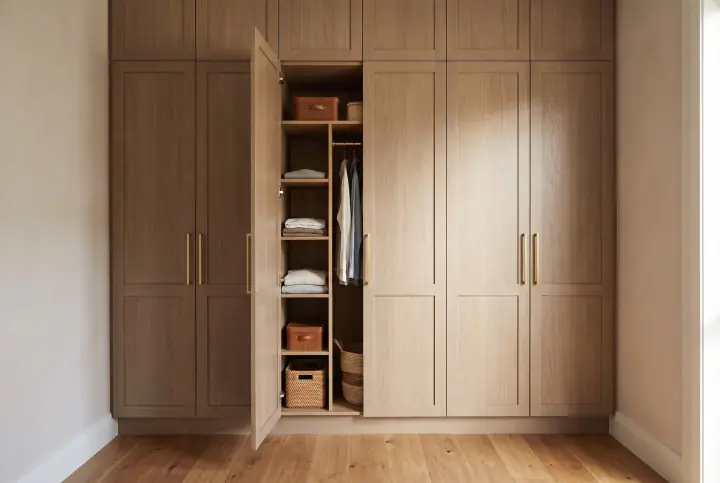
Hinged wardrobe doors use concealed cabinet hinges, the kind in a kitchen: invisible when the door is closed, adjustable in three directions so the door can be lined up after fitting, and available with a soft-close damper. A full-height door takes four or five hinges. Soft-close is worth having on bedroom doors, where a slammed door is heard through the house.
Rails
The hanging rail is an oval or round chrome tube in end supports. The detail that matters is span: a rail over about 1,200mm sags under a full load. Wider wardrobes are divided into bays so no rail spans more than that.
Shelf supports
Adjustable shelves sit on shelf pins in a column of holes, so they move in seconds. Fixed shelves are glued and doweled. A mix is normal: a fixed shelf at the top of a bay for strength, adjustable shelves below.
Handles and pulls
- Sliding doors: a recessed finger pull in the aluminium frame, so nothing sticks out to catch a sleeve.
- Hinged doors: a handle or knob, a routed finger pull in the door edge, or a push-to-open catch. Finger pulls suit a flat modern door; handles suit a shaker door.
- Drawers: matched to the doors.
Handles are chosen at the consult from a range; they can be changed later, the hinges and runners cannot without rebuilding.
Accessories with moving parts
Pull-out pant racks, tie racks, wire baskets and swivel mirrors all run on runners or pivots. The same rule applies: ball-bearing runners that extend fully and do not sag. Our accessories page shows them in real wardrobes.
What to ask any wardrobe company
- Are the sliding doors top-hung on an aluminium track?
- Are the drawer runners ball-bearing, full-extension and soft-close?
- Are the hinges concealed and soft-close?
- What is the maximum rail span?
- What does the workmanship guarantee cover, and for how long?
The answers tell you more about the wardrobe than the colour chart does. Every Reflections wardrobe is built with quality hardware in our Blacktown factory and carries a 10-year workmanship guarantee.