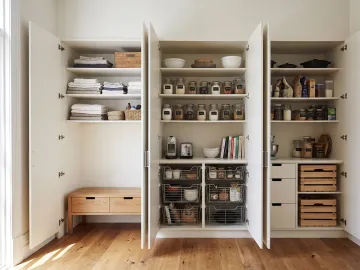
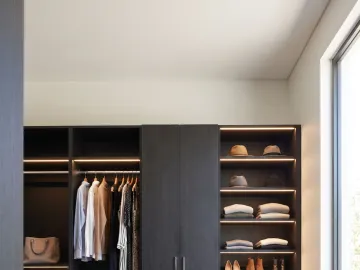
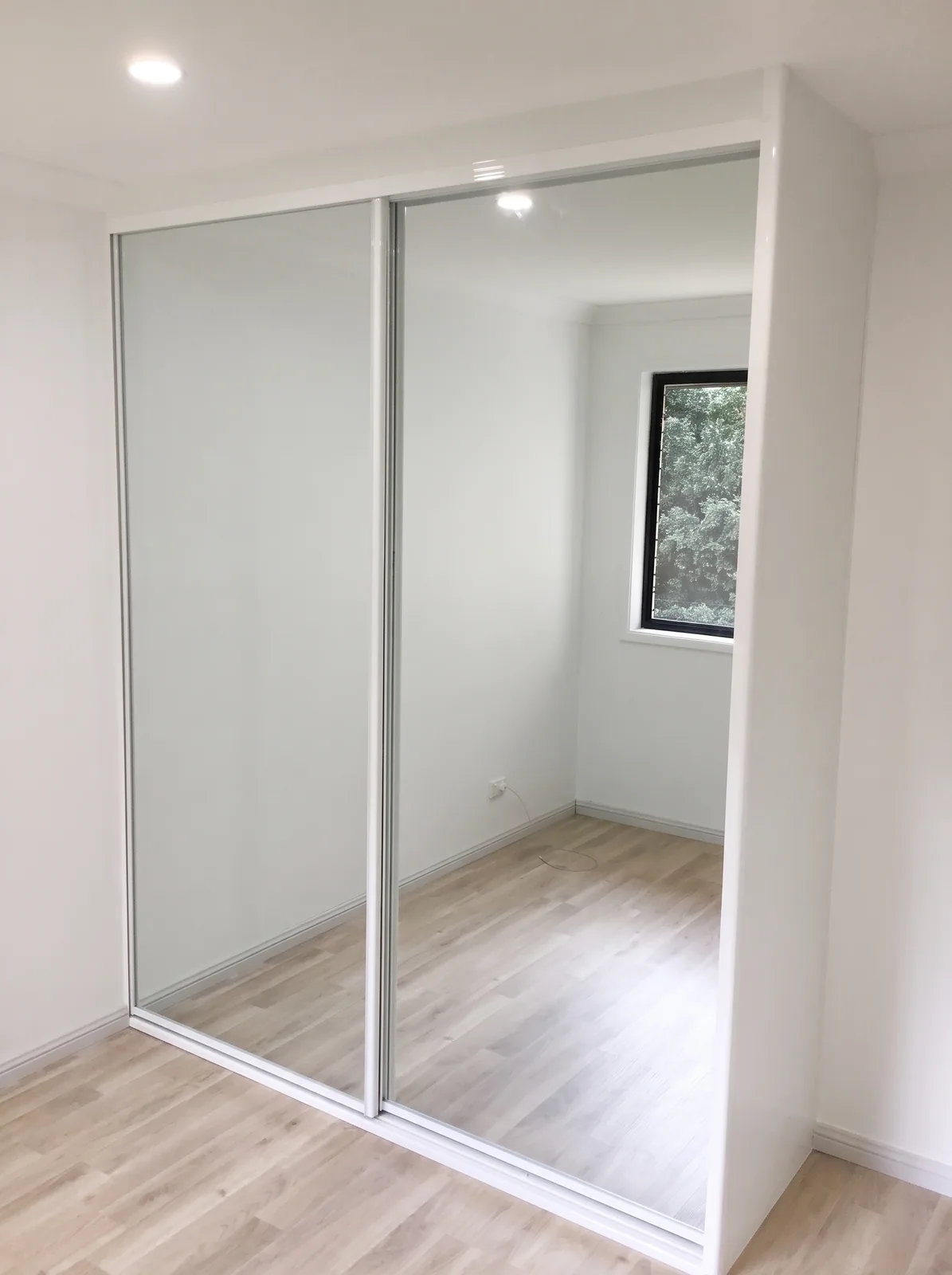
Short answer: design a child’s wardrobe for the teenager they will be, then set the rails and shelves low for now. Adjustable shelving, a rail that can move up, drawers at the bottom for small things and toys, and a mirror sliding door for a small room. The wardrobe should never be replaced because the child got taller.
What a kids’ wardrobe has to do
A child’s clothes are short, numerous and change every season. A five-year-old needs very little hanging and a lot of folded storage. A fifteen-year-old needs double hanging, a drawer bank and somewhere for shoes. The wardrobe has to be both, ten years apart, without rebuilding.
Layout at age 5 to 8
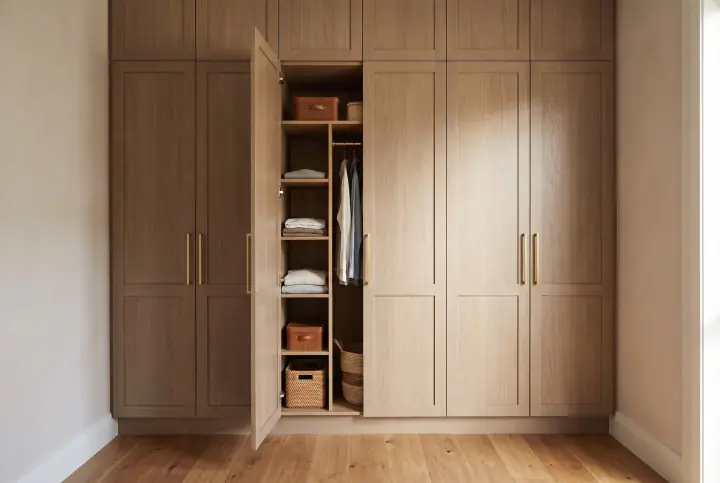
- One low rail at about 1,200mm, so they can reach their own clothes and learn to hang them up.
- Shelves above the rail for folded clothes, out of reach of small hands if you prefer, or at their height if you want them choosing.
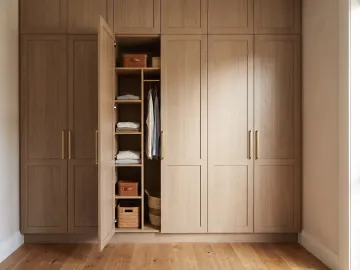
- Deep drawers or baskets at the bottom for toys, pyjamas, socks and the things that otherwise live on the floor.
- A top shelf for seasonal clothes, hand-me-downs waiting to fit and the next size up.
Layout at age 9 to 13
- Rail raised to about 1,400 to 1,500mm, or a second rail added above for double hanging as the clothes get longer.
- Adjustable shelves moved to suit folded uniforms and sports gear.
- Drawers become clothes drawers; the toy baskets go.
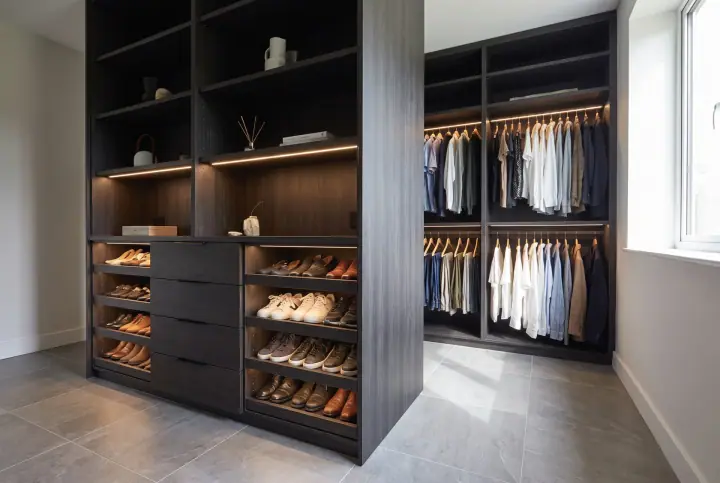
- Shoe shelf at the bottom of one bay, because the shoes are now a problem.
Layout at age 14 plus
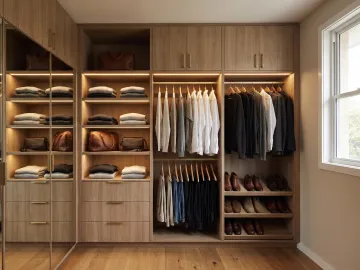
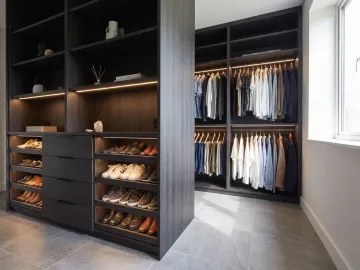
- Double hanging at about 1,000 and 2,000mm, like an adult’s, in one or two bays.
- One long-hang section for a formal dress, a blazer or a coat.
- Drawer bank for underwear, t-shirts, activewear.
- Angled shoe shelving.
- A mirror. A mirror sliding door, or a swivel mirror inside the robe.
The point is that the same carcass, the same bays and the same doors serve all three layouts. Only the rails and shelves move.
Design choices that make it work
- Adjustable shelving on shelf pins, so shelves move in minutes.
- Rails on adjustable supports, or a removable lower rail.
- A drawer bank at the bottom, because drawers are the one thing a small child can use fully and a teenager cannot have enough of.
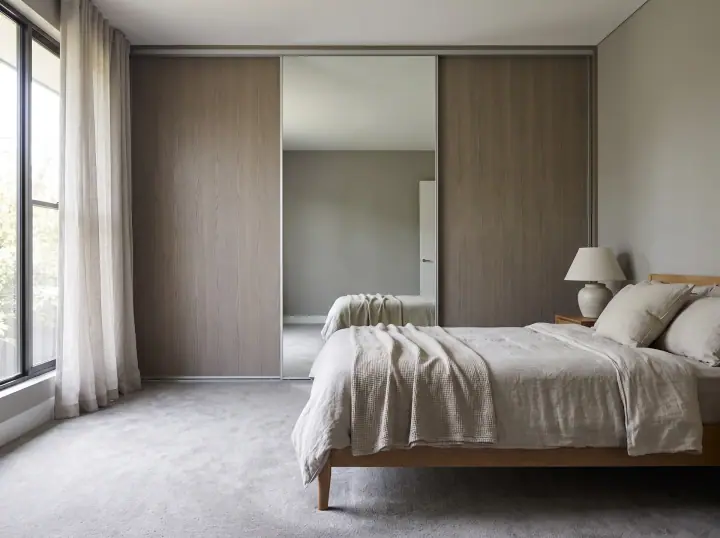
- Sliding doors, so nothing swings into the room and nothing is left open.
- Mirror on at least one door in a small room.
- Hard-wearing finishes. Matt and textured polytec finishes hide marks better than gloss. White matt is the usual choice, with a colour on one door if the child wants it.
- Soft-close drawers. Fewer slammed drawers, fewer trapped fingers.
Two kids, one wardrobe
In a shared room, divide the wardrobe into two identical halves with a central panel, each with its own rail, shelves and drawers. Mirror doors on both sides, or a mirror in the middle with a panel door each end. Clear ownership stops most of the arguments.
Small bedrooms
Most children’s bedrooms in Western Sydney homes are the smallest room in the house, around 3 by 3 metres. A floor-to-ceiling sliding robe across the full wall uses the space best, and a mirror door makes the room feel larger. The top shelf is where the outgrown clothes and next-size-up boxes go.
At the consult
Bring the child’s age and a sense of what they own. The designer sets the rails and shelves for now, plans where they move later, and designs the carcass so the move is a five-minute job. The wardrobe is made in our Blacktown factory and fitted by the licensed installer who designed it.