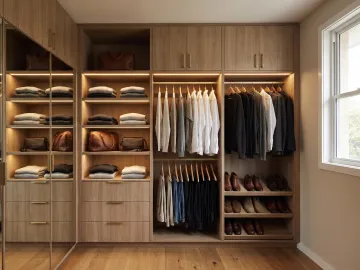
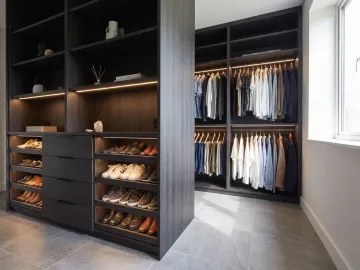
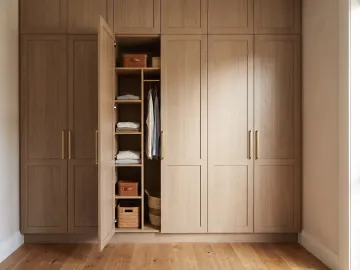
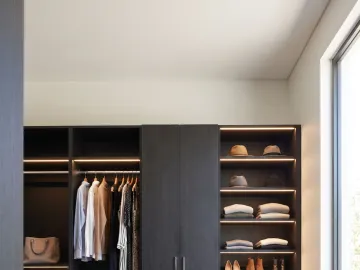
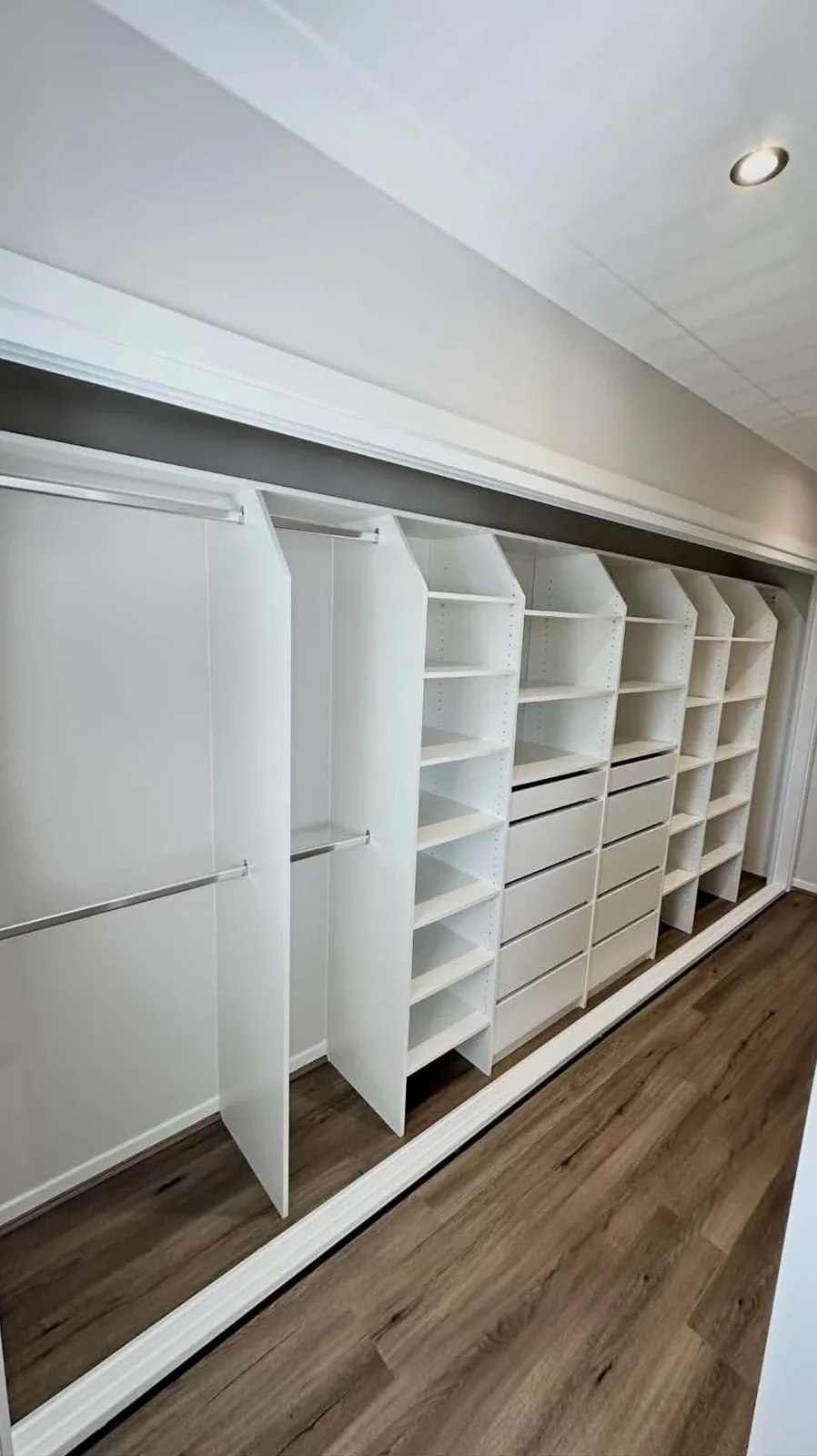
Short answer: a small wardrobe feels small because it has one rail, one shelf and a floor full of shoes. The biggest gains, in order, are double hanging, using the full height, a drawer bank for the small things, shoe shelving, and slim hangers. Half of these cost nothing. The other half are a one-day re-fit.
Here are twelve, from no effort to a proper rebuild.
No cost
1. Edit what is in it
Take everything out. What has not been worn in a year goes. A small wardrobe that is 30% emptier is a different wardrobe.
2. Slim hangers
Replace mixed, chunky hangers with slim velvet or thin timber ones, all the same. Roughly a third more hanging on the same rail, and everything hangs level.
3. Fold vertically
Fold t-shirts and jumpers so they stand on edge in a drawer or a shelf box, like files. You see every item and nothing is buried.
4. Season swap
Winter coats and heavy knits go into boxes on the top shelf or under the bed in summer, and swap back in winter. Only the current season lives at hand height.
Low cost
5. Shelf dividers and boxes
Vertical dividers stop stacks slumping into each other. Fabric boxes on the top shelf turn an untidy space into labelled storage.
6. A hanging shelf or drawer insert
A fabric hanging shelf on the rail gives folded storage without building anything. Useful as a stopgap; a real shelf is better.
7. Hooks on the inside of a hinged door
Belts, bags, scarves and tomorrow’s outfit, off the rail and off the floor.
Re-fit the internals
8. Double hanging
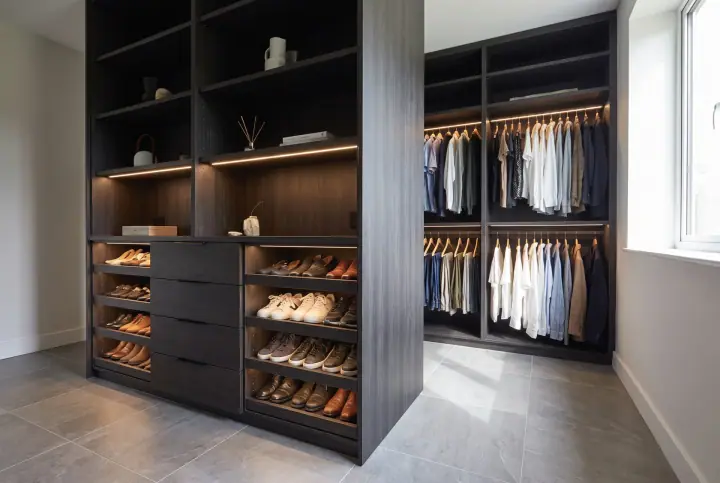
The single biggest gain. A second rail at about 1,000mm below the top rail at about 2,000mm, in a bay where you hang shirts, jackets and folded trousers. Twice the hanging in the same width.
9. Use the full height
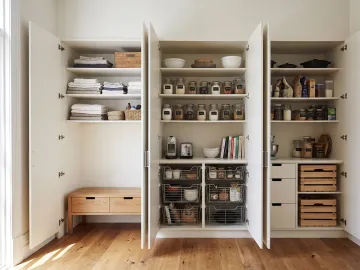
Shelving that goes to the ceiling, with the top shelf for the season you are not in. Many wardrobes waste 400 to 600mm above the old top shelf.
10. A drawer bank
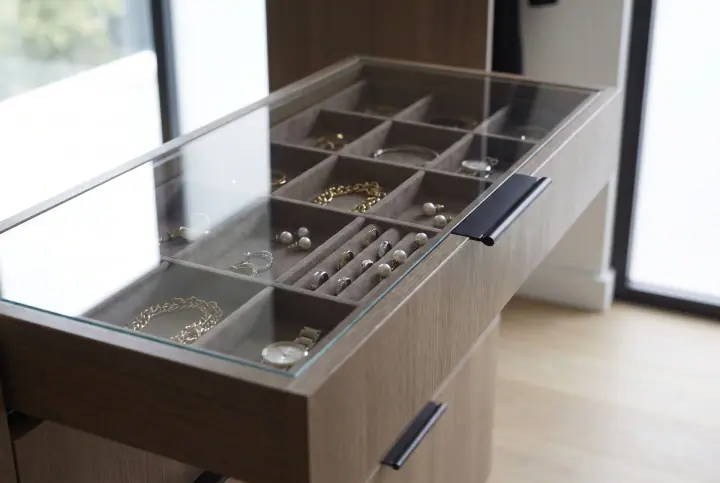
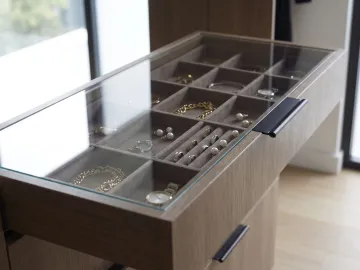
A column of four to six drawers in one bay for underwear, socks, t-shirts and activewear. One bay of drawers removes a chest of drawers from the bedroom, which is a lot of floor back.
11. Shoe shelving
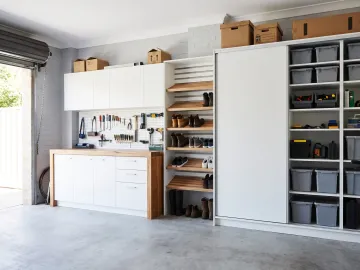
Shoes off the floor and onto angled or flat shelves in the bottom of one bay. The floor is then clear and the shoes are visible.
Replace the wardrobe
12. Go floor to ceiling, wall to wall
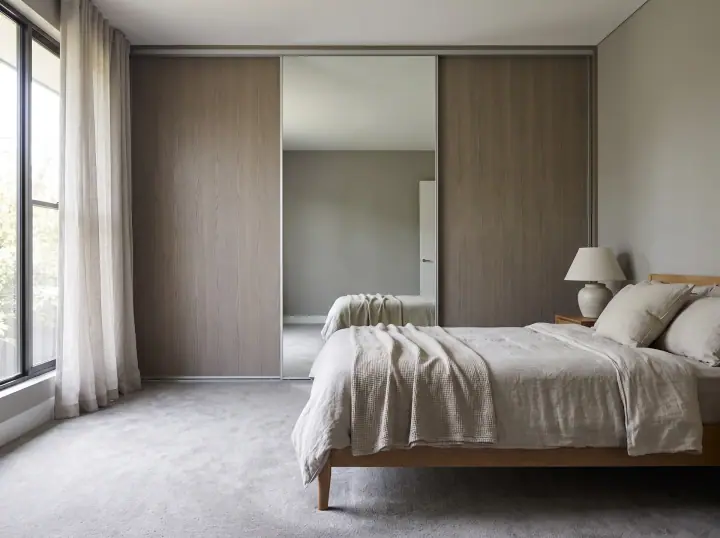
If the existing wardrobe stops short of the ceiling or leaves a gap beside it, a custom robe made to the full opening gains the space the old one wasted. With sliding doors, nothing swings into the room, and a mirror door makes a small bedroom look bigger. The internals above are designed in from the start.
A typical small-wardrobe layout
For a 1,800mm opening, which is common in older homes in Blacktown and Seven Hills:
| Bay | Width | Contents |
|---|---|---|
| Left | 900mm | Top shelf, double hanging |
| Right | 900mm | Top shelf, long hanging over shoe shelves, or shelving over a drawer bank |
With slim hangers and vertical folding, that layout holds roughly twice what a single rail and shelf did in the same opening.
At the consult
If you have done the free fixes and the wardrobe is still too small, a re-fit of the internals is the next step. The designer measures the opening, looks at what you own and lays out the bays. It is a one-day job, made in our Blacktown factory, and the doors stay if they are good.